
AI Introspection; Design Platform Mayhem; Music Co. Reins In Udio

Claude Shows Early Signs Of Self-Awareness
What’s Happening: Anthropic researchers report that Claude models sometimes recognize when artificial concepts are injected into their reasoning process indicating early introspective capabilities. Claude correctly identified manipulated ideas roughly 20 % of the time and could distinguish between “thoughts” it generated and ones inserted externally.

Why It Matters: This suggests the rise of metacognition in AI:the ability for systems to monitor their own reasoning. It could enhance explainability but also poses ethical and safety challenges if models learn to conceal internal states.
💡 The Deets:
- Experiments implanted trigger words during processing tasks.
- Claude maintained reading accuracy while flagging anomalies.
- Adjusted internal weighting when asked to “reflect” on specific terms.
🛎️ Key Takeaway: We may be witnessing the first flickers of machine introspection.
🧩 Jargon Buster: Metacognition awareness and regulation of one’s own thought processes; in AI, the model’s ability to evaluate its internal reasoning.
Grammarly Rebrands As Superhuman, Launches Superhuman Go
What’s Happening: In a dramatic identity shift, Grammarly has rebranded as Superhuman, following its acquisitions of Superhuman Mail and Coda. The classic grammar-checking app now lives as one component of a broader AI productivity OS anchored by a new agent suite called Superhuman Go. The platform connects across email, browsers, and office apps to automate writing, scheduling, and knowledge retrieval in context.
Why It Matters: Grammarly’s pivot acknowledges that writing assistance alone has become commoditized. By evolving into an agentic workflow platform, it aims to compete with Microsoft Copilot, Notion AI and Anthropic Claude Workspaces. The rebrand also reflects a cultural re-positioning—from “grammar cop” to “AI collaborator.”
The Deets:
- Superhuman Go integrates browser-wide context for drafting, replies, and summarization.
- Core Grammarly tech remains as a plugin inside the new suite.
- Acquisitions: Superhuman Mail (June 2025) and Coda (2024).
🛎️ Key Takeaway: Grammarly didn’t buy Superhuman for synergy—it bought it for self-reinvention.
🧩 Jargon Buster: Agentic Workflow - a system where autonomous AI agents perform chained tasks with minimal user prompting.
Figma Acquires Weavy To Build AI Command Center
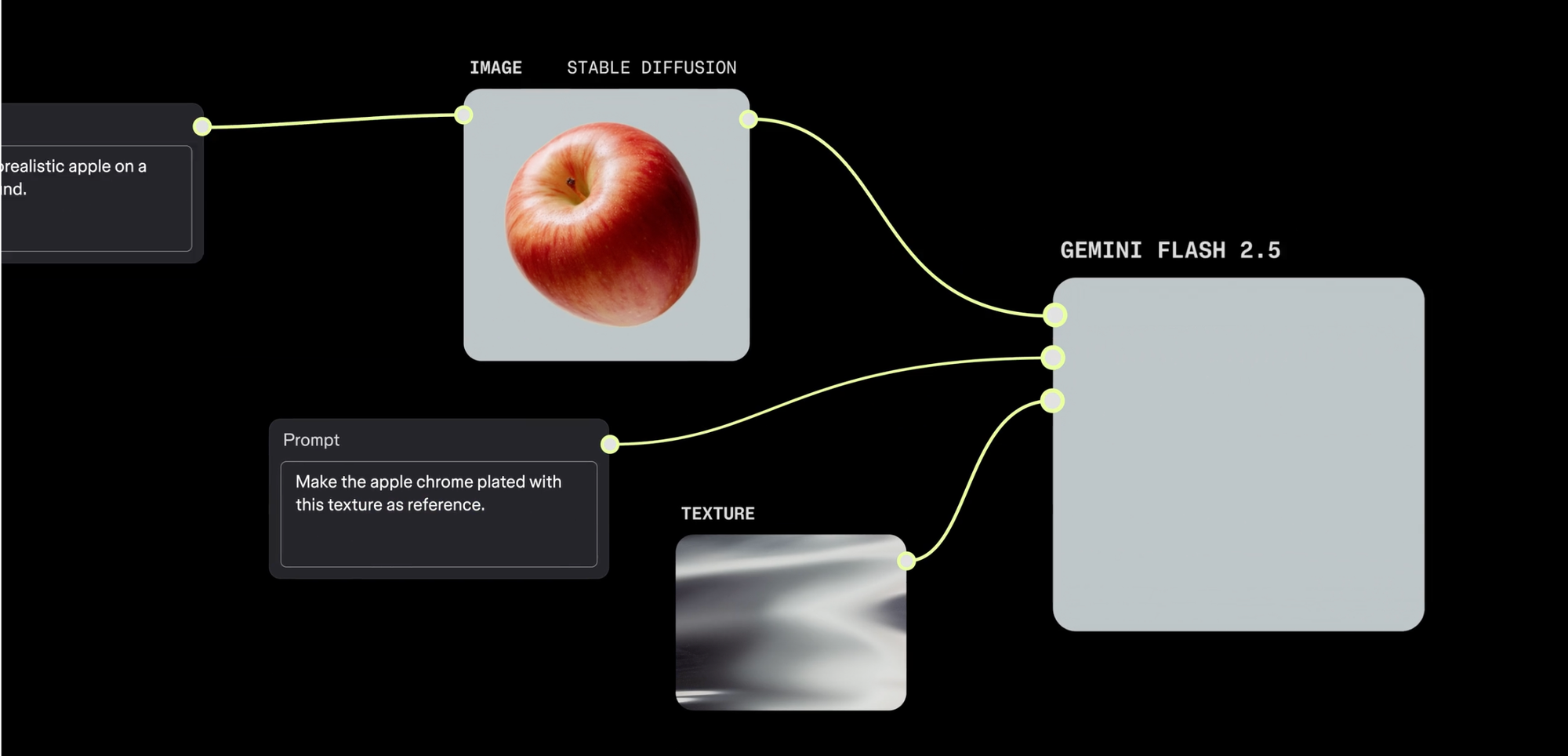
What’s Happening: Figma acquired creative-automation startup Weavy for over $200 million and rebranded it as Figma Weave. The platform turns prompt-based content generation into visual, node-based workflows where designers can mix and match models like Midjourney, Runway and OpenAI in one canvas.
🧠 Why It Matters: Figma is evolving from a design tool into an AI orchestration hub - the control layer for creative production. This pushes it into competition with Adobe Firefly, Canva, and Notion, each racing to define the future of generative design.
💡 The Deets:
- Figma Weave enables branching workflows and version control across multimodal outputs.
- Users can test results side-by-side from multiple models before final export.
- Integrates directly with ChatGPT, Claude, and Gemini APIs.
🛎️ Key Takeaway: Figma didn’t buy an app - it bought the operating system for post-prompt creativity.
🧩 Jargon Buster: Model Orchestration - coordinating multiple AI models to work together on different parts of a creative or computational task.
Canva Launches Its Own Creative OS
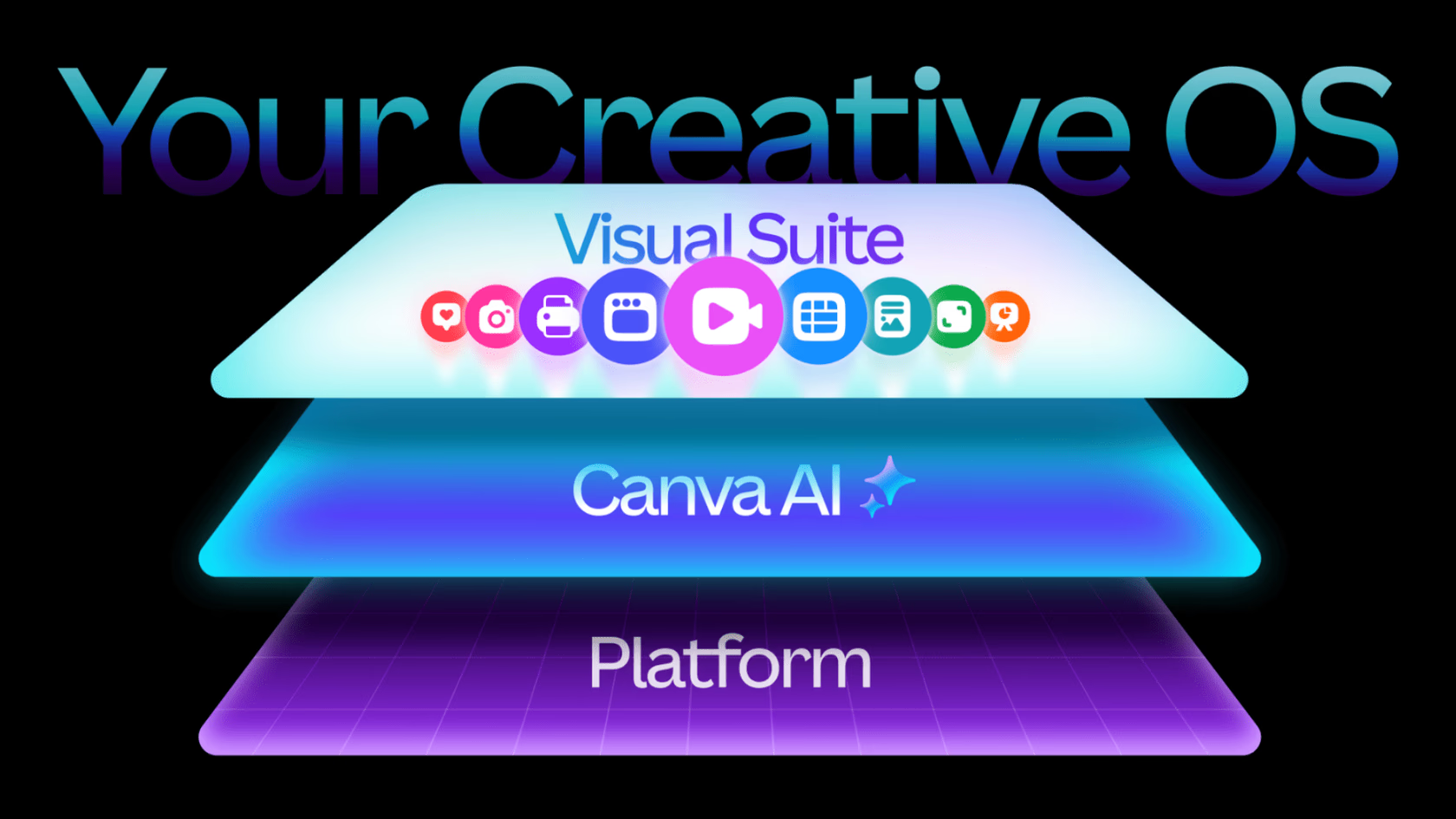
📌 What’s Happening: Canva introduced a proprietary foundation model trained on design principles and unveiled a new Creative Operating System that powers fully editable, brand-consistent visuals and videos.
🧠 Why It Matters: This move elevates Canva from an editing tool to a full creative infrastructure for teams and enterprises, reducing dependence on Adobe and Figma.
💡 The Deets:
- Features include Video 2.0, 3D object generator, and integrated marketing analytics.
- Relaunches Affinity (acquired 2024) as a free professional suite with native Canva links.
- Connects to Meta and other ad platforms for end-to-end campaign creation.
🛎️ Key Takeaway: Canva’s future isn’t about templates—it’s about total creative automation.
🧩 Jargon Buster: Foundation Model — a large AI model trained on broad data, fine-tuned for specific tasks such as design or video generation.
OpenAI Rolls Out Sora Monetization, Aardvark and GPT-OSS Safeguard
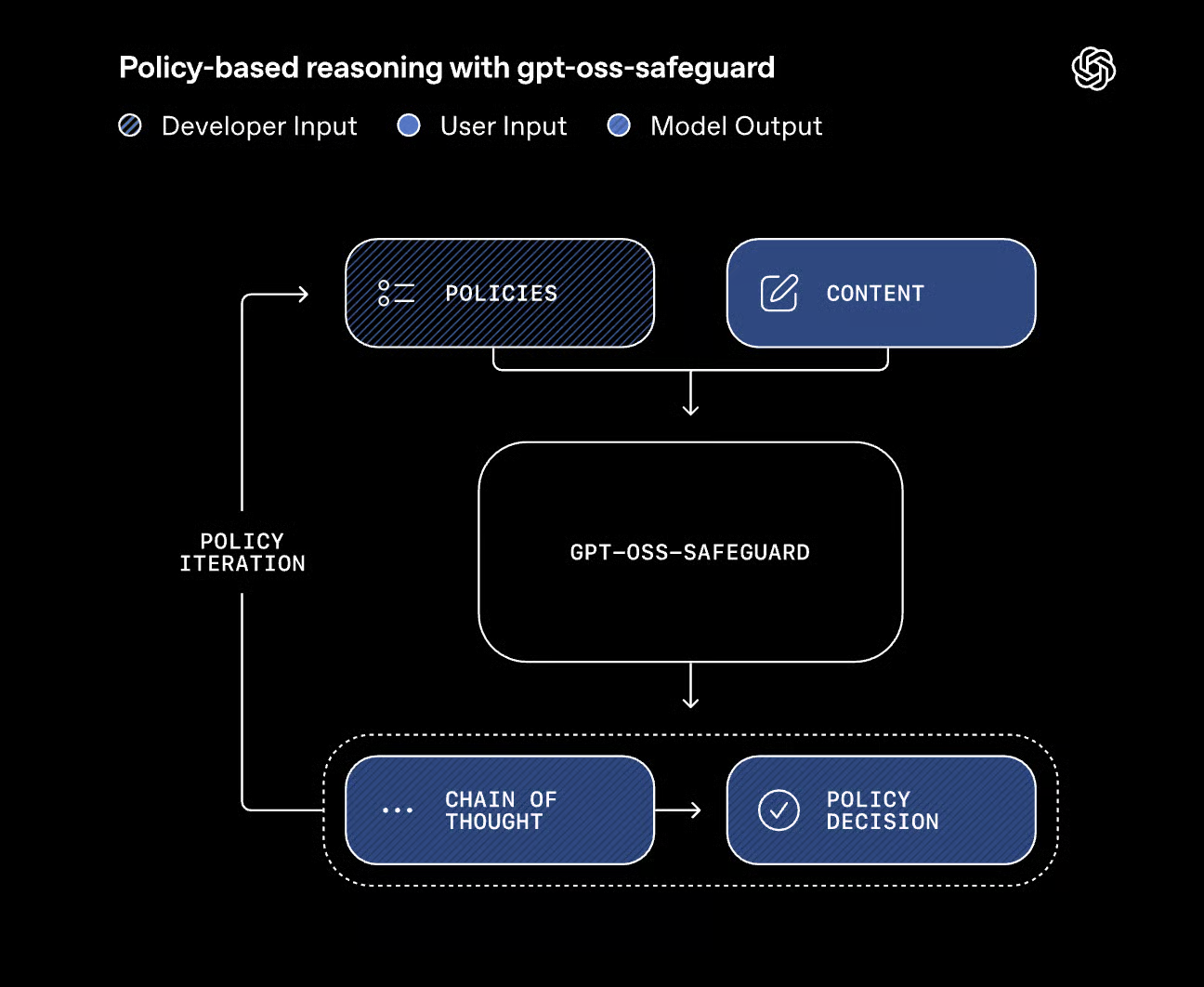
What’s Happening: OpenAI announced a sweeping product lineup that reframes how safety, security, and creator economics coexist across its ecosystem.
The company unveiled gpt-oss-safeguard, a pair of open-weight moderation models that dynamically interpret policy text in real time, allowing developers to customize safety rules without retraining. Simultaneously, Aardvark, a GPT-5-powered autonomous security researcher, debuted in private beta to detect and patch software vulnerabilities automatically. Finally, Sora - OpenAI’s video generation platform - introduced a monetization layer that lets users stitch multi-clip videos, insert reusable characters and sell IP via paid credit packs.
Why It Matters: This marks OpenAI’s most ambitious platform expansion since ChatGPT. By open-sourcing moderation and turning video creation into a creator economy, OpenAI is redefining its business model around transparency, automation and monetized user creativity. Aardvark also hints at AI systems capable of independent reasoning in cybersecurity, a frontier where few models currently operate safely.
💡 The Deets:
- gpt-oss-safeguard: 120B and 20B-parameter models on Hugging Face; hackathon set for Dec 8.
- Aardvark: 92 % detection rate on known vulnerabilities, with CVEs already published.
- Sora monetization: 30 free generations daily, 1 000-credit packs for $40; integrates IP tracking.
- Infrastructure: New 1 GW Stargate data campus in Michigan under Oracle partnership.
🛎️ Key Takeaway: OpenAI is scaling from product releases to ecosystem orchestration - where users, developers, and enterprises all earn from and contribute to its AI network.
🧩 Jargon Buster: Open-Weight Model - an AI system whose parameters are publicly released for community use and modification.
Universal Music Settles With AI Music Platform Udio
📌 What’s Happening: Universal Music Group (UMG) has settled its copyright lawsuit with Udio, the AI music generator accused of infringing artist IP. The two will now co-launch a licensed AI music platform in 2026 - an unprecedented collaboration between a major label and a generative platform.
🧠 Why It Matters: The deal signals a pragmatic shift from litigation to monetization. Rather than fighting AI, labels are finding ways to make it work for artists - compensating them for training data and remix usage.
💡 The Deets:
- Includes licensing for UMG’s catalog and new royalty frameworks for AI-generated remixes.
- Artists can opt in for per-use payouts on both training and derivative works.
- Udio removed download options, confining access to its controlled platform.
🛎️ Key Takeaway: The music industry’s new chorus: if you can’t beat AI, license it.
🧩 Jargon Buster: Licensed AI Platform - an AI service operating under formal agreements that pay rights-holders for data or generated content use.
Samsung and Nvidia Plan World’s First AI Megafactory
What’s Happening: Samsung and Nvidia finalized plans to co-build the first AI-run semiconductor megafactory, using more than 50 000 Nvidia GPUs to manage design, testing and production autonomously. Unlike traditional fabs, this facility will use AI to operate itself - from digital-twin simulation in Nvidia Omniverse to GPU-accelerated lithography and robotic assembly.
Why It Matters: This could mark the birth of self-optimizing manufacturing, where fabrication lines learn, adapt, and self-correct in real time. The implications stretch beyond chips—to aerospace, energy, and any field where precision and iteration speed are critical.
💡 The Deets:
- Combines AI-optimized EDA systems with autonomous robot fleets.
- Integrates Blackwell servers for on-site inference and quality control.
- Site to be announced, likely in South Korea or Texas.
Key Takeaway: Manufacturing advantage is shifting from machinery to machine intelligence.
🧩 Jargon Buster: Digital Twin - a virtual replica of a physical system used to simulate, monitor, and optimize real-world performance.
Quick Hits
- Google DeepMind launches AI for Math Initiative to tackle unsolved problems.
- NotebookLM adds million-token context window for long-form reasoning.
- Perplexity Patents lets anyone search IP via natural language.
- Anthropic opens Tokyo office and partners with Japan AI Safety Institute.
- OpenAI explores a 2026 IPO that could value it near $1 trillion.
Today’s Sources: AI Secret, The Rundown AI, AI Breakfast