
Apple Picks Gemini; AI Scientist; First Certified 'Exosuit'

Gemini To Handle Siri Overhaul
📌 What’s Happening: After years of internal setbacks, Apple has reportedly struck a $1B annual deal to integrate Google’s Gemini model into a redesigned version of Siri.
According to Bloomberg, the custom 1.2 trillion parameter version of Gemini will power Siri’s summarization, reasoning and multi-step planning features - all while running on Apple’s Private Cloud Compute infrastructure to preserve user privacy.
Apple reportedly trialed OpenAI’s GPT models and Anthropic’s Claude before selecting Gemini, which offers greater cross-modal support.
🧠 Why It Matters: The move signals Apple’s pragmatic shift away from building all AI in-house. For years, Siri has lagged behind newer assistants like ChatGPT and Gemini. Partnering with Google, even quietly, underscores the scale of Apple’s AI deficit — and its willingness to borrow from competitors to close the gap. The partnership could also reshape competitive dynamics between the two tech giants, effectively making Google a silent co-pilot behind Siri.
💡 The Deets:
- The Gemini model will power Siri’s context awareness, summarization, and task chaining.
- The integration is set for Spring 2026, as Apple rebuilds its internal AI division.
- The deal follows Apple’s broader “Apple Intelligence” rollout announced earlier this year.
- Google’s involvement is expected to remain unpublicized in Apple marketing materials.
🛎️ Key Takeaway: Apple’s most famous assistant is finally getting an intelligence transplant — and it’s coming from its biggest rival.
🧩 Jargon Buster: Private Cloud Compute - Apple’s security architecture that processes AI data in the cloud while preventing external access or retention.
More: The Rundown AI
💡 Hardware & Wearables
Ex-Meta Designers Launch Stream Ring AI Wearable
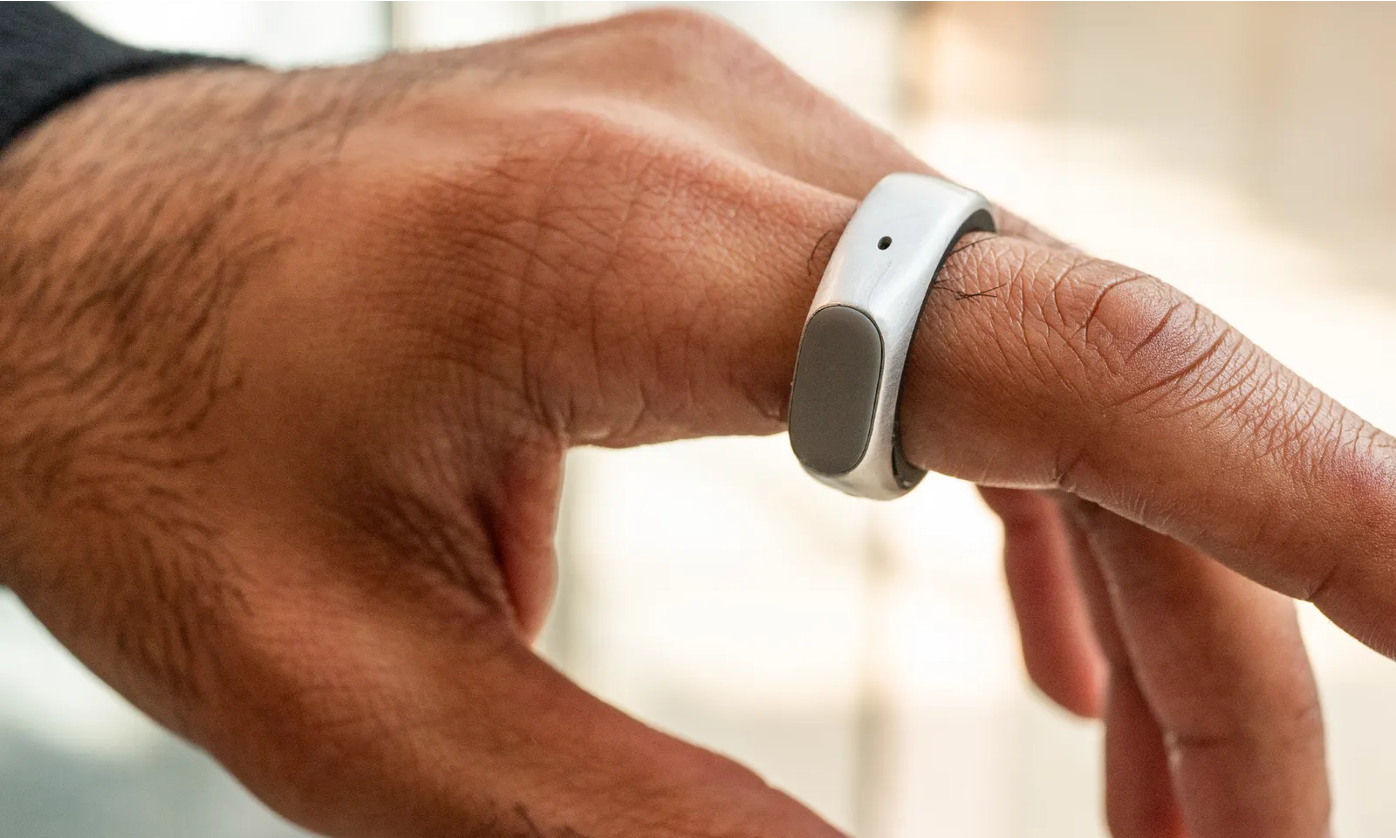
📌 What’s Happening: A new startup called Sandbar, founded by former Meta designers, has launched the Stream Ring, an AI-powered wearable that records whisper-level speech and turns it into transcribed, searchable notes. The ring doubles as a media controller and AI voice companion, responding using a synthesized version of the user’s voice created with ElevenLabs technology.
🧠 Why It Matters: AI wearables are quickly becoming the next frontier in personal computing, merging ambient voice capture with digital memory. While others like Humane and Rewind have stumbled on complexity, Stream Ring’s simplicity - a whisper interface, tactile activation and no screens - could make it the most approachable “AI-in-your-pocket” yet.
💡 The Deets:
- Cofounders Mina Fahmi and Kirak Hong previously worked on Meta’s neural interface team at CTRL-Labs.
- The ring activates by touch rather than wake words.
- Launch price: $249, plus a $10/month subscription, with delivery planned for Summer 2026.
🛎️ Key Takeaway: The AI hardware wave is getting smaller, subtler, and more personal — one whisper at a time.
🧩 Jargon Buster: Neural Interface - a technology that connects human biological signals (like muscle movement or brain activity) to computers for input or control.
More: The Rundown AI
🔍 AI Research & Discovery
Edison Scientific Debuts Kosmos AI Scientist
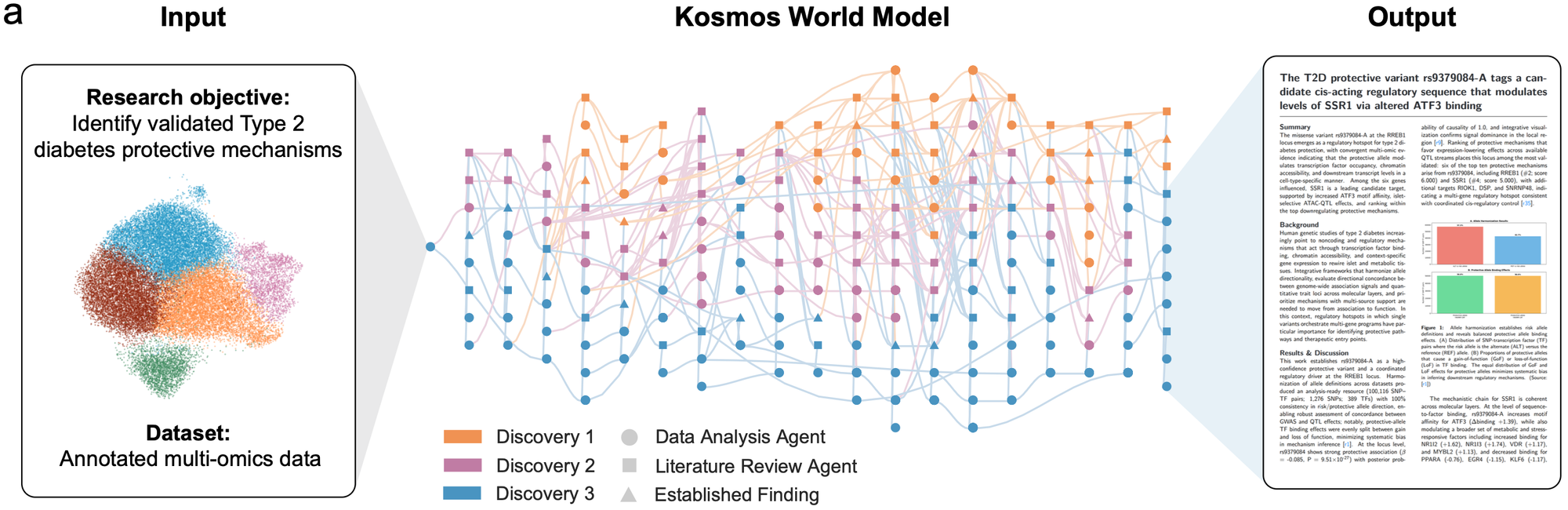
📌 What’s Happening: FutureHouse has spun out a new company called Edison Scientific, launching its flagship product Kosmos, an autonomous “AI scientist” that can complete months of research in a single day.
Kosmos integrates literature review, data analysis and hypothesis testing across scientific domains. It’s capable of processing up to 1,500 papers per run, writing 42,000 lines of code and maintaining full citation traceability for every generated claim.
🧠 Why It Matters: Kosmos represents a major leap in scientific automation - not replacing researchers, but compressing timelines and amplifying discovery. The system’s ability to reproduce and extend published findings hints at an era where AI can serve as both collaborator and auditor across disciplines like biomedicine, chemistry, and physics.
💡 The Deets:
- 79% of Kosmos’ outputs were validated as accurate.
- Early trials showed it reproducing unpublished results.
- Edison plans commercial rollout for pharma and biotech research in 2026.
🛎️ Key Takeaway: The lab of the future will think, read and experiment on its own - and Kosmos may be its first resident.
🧩 Jargon Buster: Autonomous Research Agent - an AI system capable of independently designing and executing scientific experiments or analyses.
More: The Rundown AI
Google’s Dyson Sphere Program for AI Compute
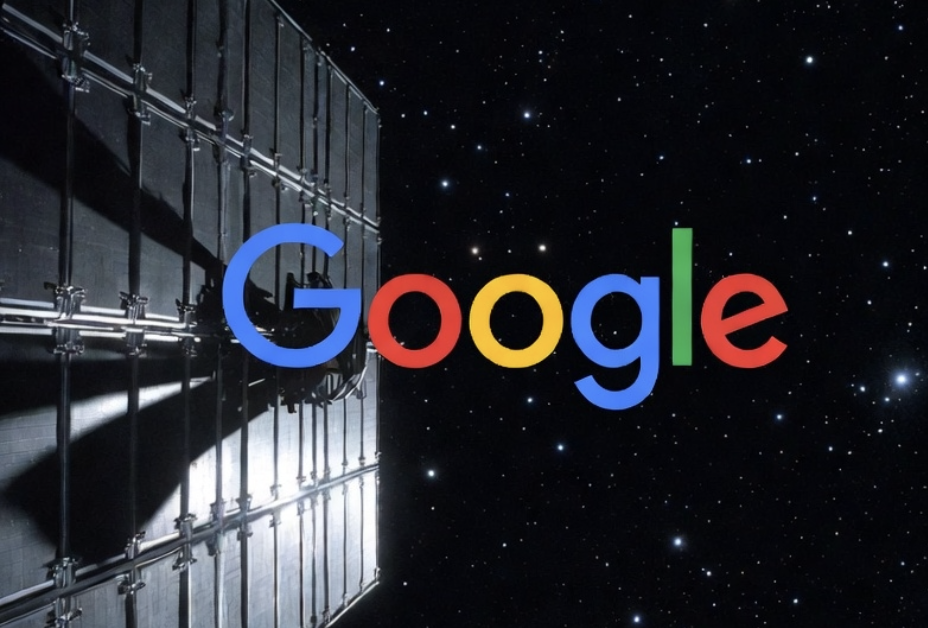
📌 What’s Happening: In one of its boldest infrastructure concepts yet, Google has revealed Project Suncatcher: a space-based AI compute initiative that would run machine-learning workloads aboard solar-powered satellites.
The idea: orbiting TPUs powered by continuous sunlight and connected via terabit optical links. Early radiation-hardened TPU tests are underway, with the first prototype satellites expected to launch in 2027 in partnership with Planet Labs.
🧠 Why It Matters: If successful, this project would decouple AI computation from Earth’s energy markets and data center constraints. Suncatcher could become a paradigm shift - a self-sustaining, off-planet infrastructure that makes AI training truly continuous and carbon-free.
💡 The Deets:
- Designed to leverage uninterrupted solar exposure in low-Earth orbit.
- Uses Trillium TPUs, optimized for radiation resistance.
- Could rewrite hyperscaler economics by moving compute beyond terrestrial limits.
🛎️ Key Takeaway: The next great data center isn’t under the ocean - it may be orbiting above us.
🧩 Jargon Buster: Dyson Sphere - a theoretical megastructure that captures a star’s energy output for advanced civilizations; used here metaphorically for orbital compute.
More: AI Secret
🎶 Culture & Agents
AI Singer Xania Monet Hits Billboard Charts

📌 What’s Happening: Xania Monet, an AI-generated R&B artist created by poet Telisha Jones using Suno, just made history as the first artificial act to appear on a Billboard radio chart. Her single “How Was I Supposed to Know?” hit No. 30 on Adult R&B Airplay after going viral on TikTok and crossing into mainstream radio.
🧠 Why It Matters: What began as an experiment in AI-assisted creativity has crossed into pop culture. Radio programmers care about retention, not origin stories, and listeners increasingly can’t tell or don’t care whether a performer is human. This milestone marks a cultural normalization of AI artistry - and likely the first of many such chart-toppers.
💡 The Deets:
- The track spread across streaming and radio organically via social virality.
- Artists like SZA and Kehlani have criticized AI vocal models.
- Billboard confirmed Xania Monet met eligibility for airplay metrics.
🛎️ Key Takeaway: The music industry’s AI disruption isn’t theoretical - it’s charting.
🧩 Jargon Buster: AI Artist - a musical persona or identity generated and performed entirely through machine learning systems trained on text, audio, and style data.
More: AI Secret
Amazon vs. Perplexity: The Proxy War for AI Agents
📌 What’s Happening: Amazon has sued Perplexity over its shopping agent “Comet,” accusing it of masquerading as human users and evading Amazon’s ad infrastructure. Perplexity argues it’s enabling open commerce through autonomous agents that perform legitimate comparisons and purchases on users’ behalf.
🧠 Why It Matters: The case exposes a larger battle for the future of the web’s interface layer. As agents replace search bars and shopping carts, control over these entry points means control over user intent - and monetization. Amazon’s lawsuit is a preemptive strike to keep the web’s commercial flow gated behind its systems.
💡 The Deets:
- Comet performs browsing and purchasing autonomously for users.
- Amazon alleges it “spoofs” human traffic and bypasses ad rails.
- The dispute mirrors early platform wars between browsers and search engines.
🛎️ Key Takeaway: The next great platform war isn’t over clicks - it’s over intent.
More: AI Secret
🤖 Robotics & Automation
XPeng Launches Humanoid Robot IRON
📌 What’s Happening: Chinese EV maker XPeng unveiled IRON, a humanoid robot featuring 60+ actuators, solid-state batteries, and an in-house “Turing” AI stack combining multimodal models for vision, language, and motion. Built using XPeng’s electric vehicle supply chain, IRON aims to serve in factories, retail and eventually homes, with production targeted for April 2026.
🧠 Why It Matters: XPeng’s leap into robotics signals how car manufacturers are repurposing EV expertise - sensors, batteries and supply chains - for humanoid platforms. But mass production of safe, durable humanoids remains elusive. IRON may be more of a brand signal than a functional milestone.
💡 The Deets:
- Demonstrated at XPeng’s AI Tech Day in Guangzhou.
- Uses solid-state batteries for higher energy density.
- Early demos show semi-autonomous motion and simple manipulation tasks.
🛎️ Key Takeaway: Robots are the new concept cars ... sleek, ambitious, and not yet ready for the commute.
🧩 Jargon Buster: Actuator - a component that converts energy into physical motion, enabling robots to move joints or limbs.
More: The Robotics Herald
Hypershell Becomes First SGS-Certified Exosuit
📌 What’s Happening: Hypershell’s X Series has become the world’s first exosuit to receive the SGS Premium Performance Mark, verifying its real-world performance in reducing oxygen use and fatigue. Co-developed with China’s National Institute of Standardization, the certification establishes new baselines for wearable robotics testing and validation.
🧠 Why It Matters: For years, exoskeletons have lived in the hype zone - cool demos, few standards. With SGS certification, the wearable robotics market gains its first credible framework for measuring safety and efficacy, paving the way for regulated adoption in industrial and defense use.
💡 The Deets:
- Field tests show 39% reduced oxygen use and 43% lower heart rate.
- The certification introduces ISO-style metrics for power-assisted motion.
- Marks a turning point for exosuits moving from consumer novelty to industrial tool.
🛎️ Key Takeaway: Exosuits just got standardized - the wearable robotics era is officially regulated.
🧩 Jargon Buster: SGS Certification - an internationally recognized validation that a product meets specific performance and safety standards.
More: The Robotics Herald
⚡ Quick Hits
- Snap will integrate Perplexity AI into Snapchat in 2026 in a $400M licensing deal.
- Michael Burry disclosed $1B in short positions against Nvidia and Palantir, citing an “AI bubble.”
- Stability AI won a UK court case against Getty Images over AI training and trademark claims.
- Google added Gemini integration into Maps for conversational navigation.
- NomadGo and Richtech Robotics are building a full-stack retail automation robot to restock shelves autonomously.
🧰 Tools Of The Day
- Kosmos: AI scientist from Edison Scientific for automated research.
- Codemaps: Windsurf’s visual coding assistant for codebase mapping.
- Sora App: OpenAI’s AI video tool, now on Android.
- Perplexity Patents: Natural-language patent search and innovation analysis.
- KaraVideo: Unified AI video generation suite.
- CopyOwl: AI research assistant for in-depth topic exploration.
- Momen AI: No-code app builder for turning prompts into functional products.
Today's Sources: The Internet, The Robotics Herald, AI Secret, The Rundown AI
On This Day in AI History: In 1998, DeepMind cofounder Demis Hassabis published early research on episodic memory and imagination in human cognition - the theoretical seed for what would later become reinforcement learning and “world models” in artificial intelligence.