
Bots Outnumber You; ChatGPT SuperApp? Gov't Buying Into AI

Today's AI Outlook: 🌤️
The Internet Has A Bot Majority Now
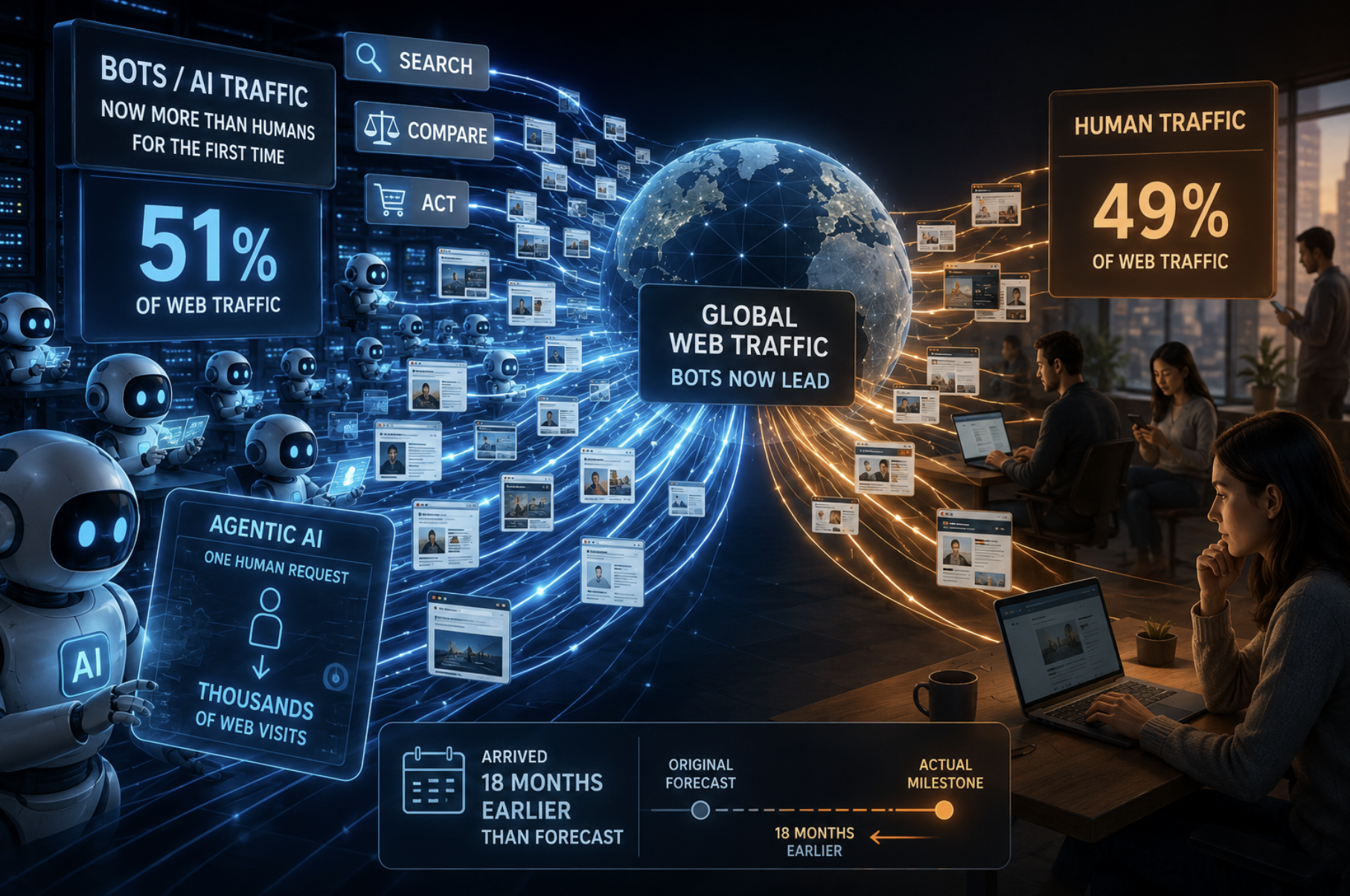
Cloudflare CEO Matthew Prince said bots now generate more web traffic than humans for the first time, a milestone that arrived 18 months earlier than he had forecast. The biggest driver is agentic AI, where one human request can trigger thousands of web visits as an AI assistant searches, compares and acts across the internet.
Why It Matters
The online economy was priced around human attention. Ads, clicks, conversions and publisher revenue all assume a person is on the other end. When most traffic comes from bots that do not read ads, linger on pages or buy in traditional ways, the busiest internet ever becomes much harder to monetize.
The Deets
- Machines now make up 57.5% of requests to HTML content, with humans at 42.5%.
- Agentic traffic reportedly grew 8,000% from early 2025 to year-end.
- A person shopping for a camera may visit five sites. An AI agent doing the same job may visit 5,000.
- Publishers and advertisers now face a messy question: how to value traffic when attention is no longer the default unit.
Key Takeaway
The web was built to capture human attention, and it just crossed into a world where most visitors cannot be sold anything.
🧩 Jargon Buster - Agentic AI: AI systems that can take multi-step actions toward a goal, rather than only answering a prompt.
New York Taps The Brakes On Data Centers

New York lawmakers passed a one-year freeze on approvals for large data centers drawing at least 20 megawatts, giving state environmental officials time to study how much electricity, water, land and pollution these facilities bring with them. If Gov. Kathy Hochul signs it by December, it would become the first statewide pause of its kind.
Why It Matters
AI’s appetite for compute is turning data centers into local political flashpoints. States want the jobs and investment, but voters are increasingly worried about the grid, water use and land grabs. New York is trying to slow the buildout without fully blocking it.
The Deets
- The pause applies to new large data centers using 20 megawatts or more.
- State environmental officials would have one year to study resource use and pollution.
- Future builders would need to fund a public hearing three months before approval.
- The grid operator is already reviewing 24 proposals totaling more than 9,000 megawatts.
Key Takeaway
New York is asking AI’s infrastructure machine to idle while politics catch up.
🧩 Jargon Buster - Megawatt: A unit of power equal to 1 million watts, often used to describe the electricity demand of major industrial sites.
🏛️ Power Plays
Uncle Sam Wants A Seat At OpenAI’s Cap Table

OpenAI and Washington are reportedly discussing a government ownership stake in the company, potentially routed through a Public Wealth Fund that would give Americans a financial cut of the AI boom. The Rundown AI reported that industry backers have discussed a 1% to 5% stake, while Sen. Bernie Sanders has pushed a much bigger idea: a one-time 50% stock tax on major AI labs.
Why It Matters
A public stake sounds populist, but it also creates a thorny conflict. The same government that regulates OpenAI could also profit from OpenAI’s success. That makes AI governance look less like a clean referee system and more like a very expensive group project.
The Deets
- Sam Altman reportedly met with Sanders and Trump officials last week.
- The idea also appeared in OpenAI’s April policy paper, according to The Rundown AI.
- President Donald Trump framed the idea as a partnership with the public.
Key Takeaway
If the government owns part of OpenAI, Washington becomes regulator, shareholder and political beneficiary all at once.
🧩 Jargon Buster - Public Wealth Fund: A government-held investment pool designed to share gains from public assets or ownership stakes with citizens.
SpaceX Is Selling The GPU Dream
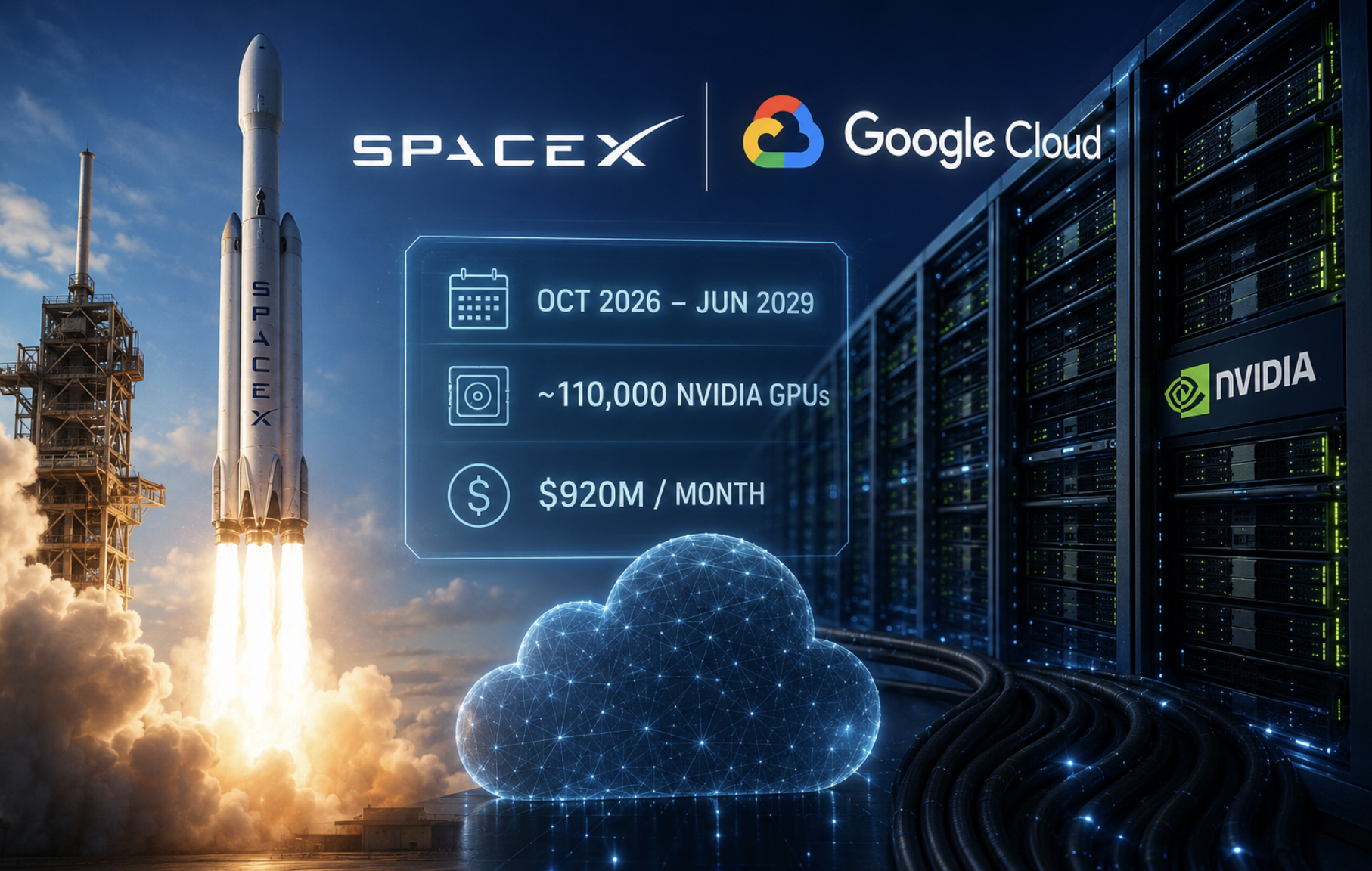
SpaceX reportedly signed a multiyear cloud deal with Google tied to roughly 110,000 Nvidia GPUs, with Google paying $920M a month from October 2026 through June 2029. The deal follows a similar compute pact with Anthropic involving more than 220,000 Nvidia processors at the Colossus 1 site in Memphis.
Why It Matters
Compute has become the new oil (cliche alert), except the barrels are GPUs and everyone needs a refinery, like, yesterday. The reporting positions SpaceX as a surprise compute landlord, showing how tight AI infrastructure supply has become.
The Deets
- The Google deal is described as worth $920M per month.
- The combined Google and Anthropic deals reportedly run past $70B in total.
- Annualized revenue from the deals would be around $26B.
- The contracts arrived as the company was targeting a $75B raise.
- AI Secret noted that Google can walk if GPUs are not delivered by Sept. 30, and either side can exit after December.
Key Takeaway
Compute contracts are becoming IPO-season rocket fuel, especially when GPUs are scarcer than patience in a CAPTCHA loop.
🧩 Jargon Buster - GPU: A graphics processing unit, the chip type heavily used to train and run modern AI models.
🛠️ Tools & Products
ChatGPT Wants To Become The SuperApp
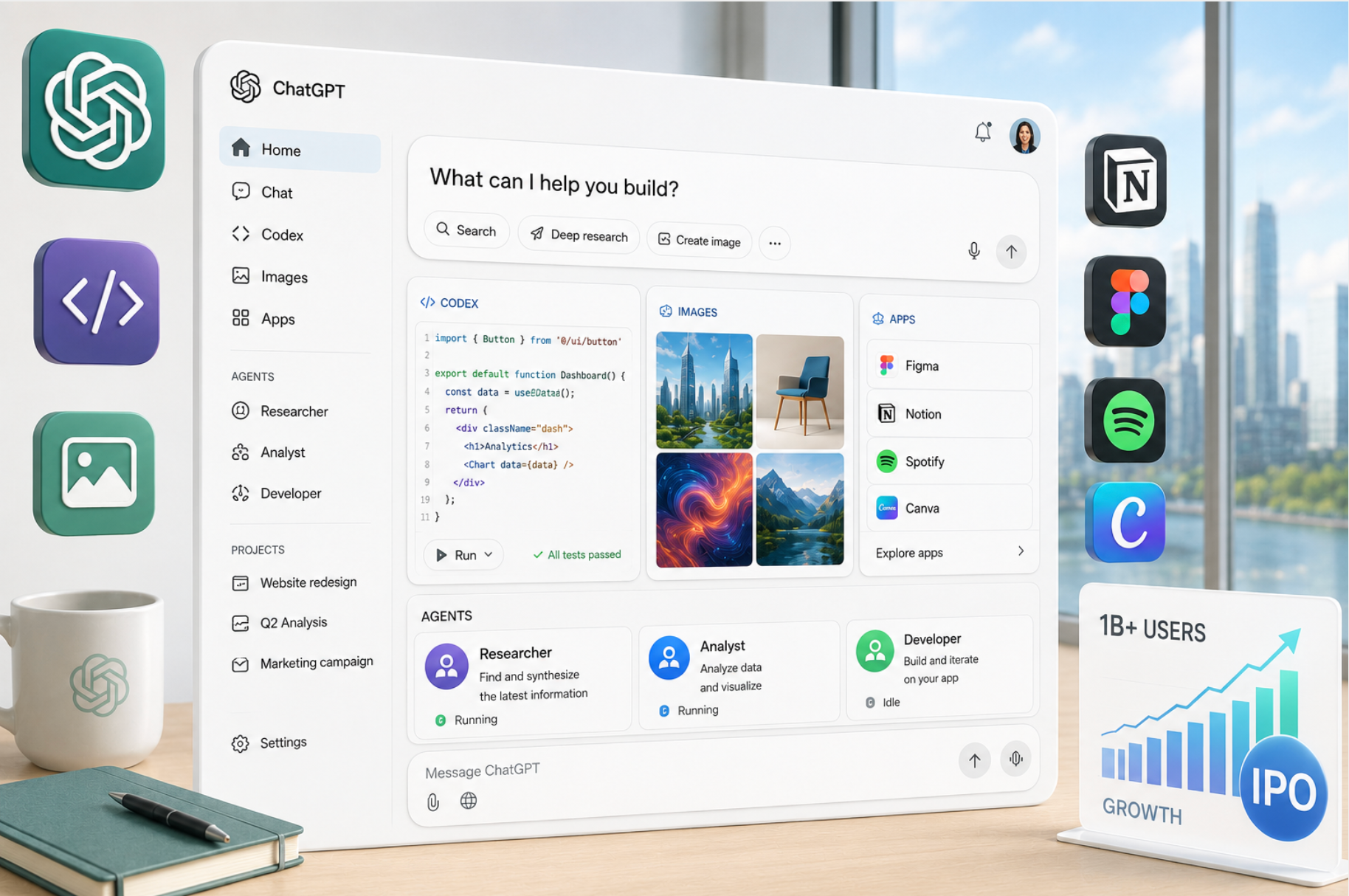
OpenAI is reportedly preparing its biggest ChatGPT revamp yet, turning the product into an agent-and-coding hub that blends Codex, images and third-party apps into one interface. The goal is to move 1B users toward higher-value paid products as OpenAI heads toward an IPO.
Why It Matters
OpenAI appears to be pushing beyond the chatbot box. Coding agents, app integrations and automated workflows are becoming the main event, while plain chat becomes the lobby.
The Deets
- The revamp would put more focus on Codex, OpenAI’s agentic coding platform.
- A senior OpenAI member reportedly told the Financial Times that “chat is dead.”
- Codex users have grown 6x to more than 5M since February.
- OpenAI also introduced Lockdown Mode, which disables features like live browsing, agent mode and deep research to reduce prompt-injection risk.
Key Takeaway
OpenAI is trying to turn ChatGPT from a place you ask questions into a place where AI does the work.
🧩 Jargon Buster - Prompt Injection: Ok hold the jokes, it's an attack that hides instructions inside content so an AI tool may ignore the user’s intent or expose sensitive information.
💸 Funding & Startups
Supabase Rides The AI Coding Wave To $10.5B
Supabase raised $500M at a $10.5B valuation, with AI Secret pointing to demand from AI coding tools like Claude Code, Codex and Cursor as a major growth driver. When AI helps more people build software faster, the tools underneath that software suddenly get a lot more valuable.
Why It Matters
The AI coding boom is spilling into developer infrastructure. More generated apps means more need for databases, authentication, storage and backend plumbing.
The Deets
- Supabase raised $500M.
- The company is now valued at $10.5B.
- AI coding tools are helping drive demand for developer platforms.
- Claude Code, Codex and Cursor were named as key forces behind the trend.
Key Takeaway
AI coding tools are changing who writes software and which infrastructure companies get paid when that software ships.
🧩 Jargon Buster - Backend-As-A-Service: A platform that provides core app infrastructure like databases, login systems and storage so developers can build faster.
⚡ Quick Hits
- Notion restored Anthropic access after a service disruption, a reminder that enterprise AI workflows can break when one dependency sneezes.
- Amazon unveiled a new warehouse robot as AI-driven automation continues to collide with layoff anxiety.
- Meta built an AI-generated clickbait news feed inside the Meta app, because apparently the internet needed more synthetic engagement bait.
- Sriram Krishnan is leaving his White House AI adviser role, reshuffling a key bridge between Silicon Valley and AI policy.
- Nvidia and LG are working together on humanoid robotics, motor systems, mechanical systems and future data center architecture.
- Apple held a “top secret” AI crisis meeting in early 2025 that reportedly pushed Tim Cook to take the company’s overhaul more seriously.
- Anthropic hired Clive Chen from OpenAI, an early member of OpenAI’s chip design team, amid rumors that Anthropic is considering its own chips.
- Microsoft Azure’s Copilot Migration Agent turns complex migration data into plain-language answers using natural language prompts.
🧰 Tools Of The Day
- Codex: OpenAI’s coding agent is moving closer to the center of ChatGPT, with reported user growth to more than 5M since February.
- Frames.md: HeyGen’s format for creating branded, consistent AI videos.
- Reve 2.0: A 4K AI image model with layout-based editing.
- Ideogram 4.0: A newly highlighted open-weight image model.
- ChatGPT Lockdown Mode: A new safety setting that disables higher-risk features like browsing, agent mode and deep research to reduce prompt-injection exposure.
Today’s Sources: The Internet, AI Secret, The Rundown AI