
Claude Blocks Elon; Google Powers AI Shopping; Robots Blend In

Today's AI Outlook: 🌤️
Anthropic Slams Door on xAI’s Access
Anthropic has cut off xAI’s access to Claude after discovering Elon Musk’s AI lab was using Claude models through Cursor to accelerate its own internal development. The block came after Anthropic determined this usage violated its terms, which explicitly prohibit using Claude to build or train competing AI systems.
The shutdown was confirmed internally by xAI cofounder Tony Wu, who told staff their Claude access via Cursor had stopped working. Wu framed the disruption as a short-term productivity hit and a long-term motivator to double down on xAI’s own coding tools. Translation: no more borrowing your rival’s Ferrari while building your own engine.
Why it matters
This is the clearest signal yet that the AI wars are entering a protectionist phase. Coding assistants are no longer productivity boosters. They are core infrastructure for building the next generation of models. Letting rivals quietly rely on your strongest system is no longer tolerated. Claude’s popularity among elite developers is now so strong it has become a strategic liability.
The Deets
- Anthropic’s terms ban competitive model development using Claude
- xAI allegedly accessed Claude through Cursor rather than direct API calls
- Similar enforcement actions previously hit OpenAI and Windsurf
- The move coincides with rising demand for Claude Code and Opus models
Key takeaway
If you are training an AI company, your rivals’ models are no longer neutral tools. They are strategic assets with locks, guards, and lawyers.
🧩 Jargon Buster: Model competition clause - A licensing restriction that prevents customers from using an AI model to build or improve competing systems.
Sources: The Rundown AI, TLDR AI
⚡ Power Plays
Meta Locks In Nuclear Power for Its AI Supercluster
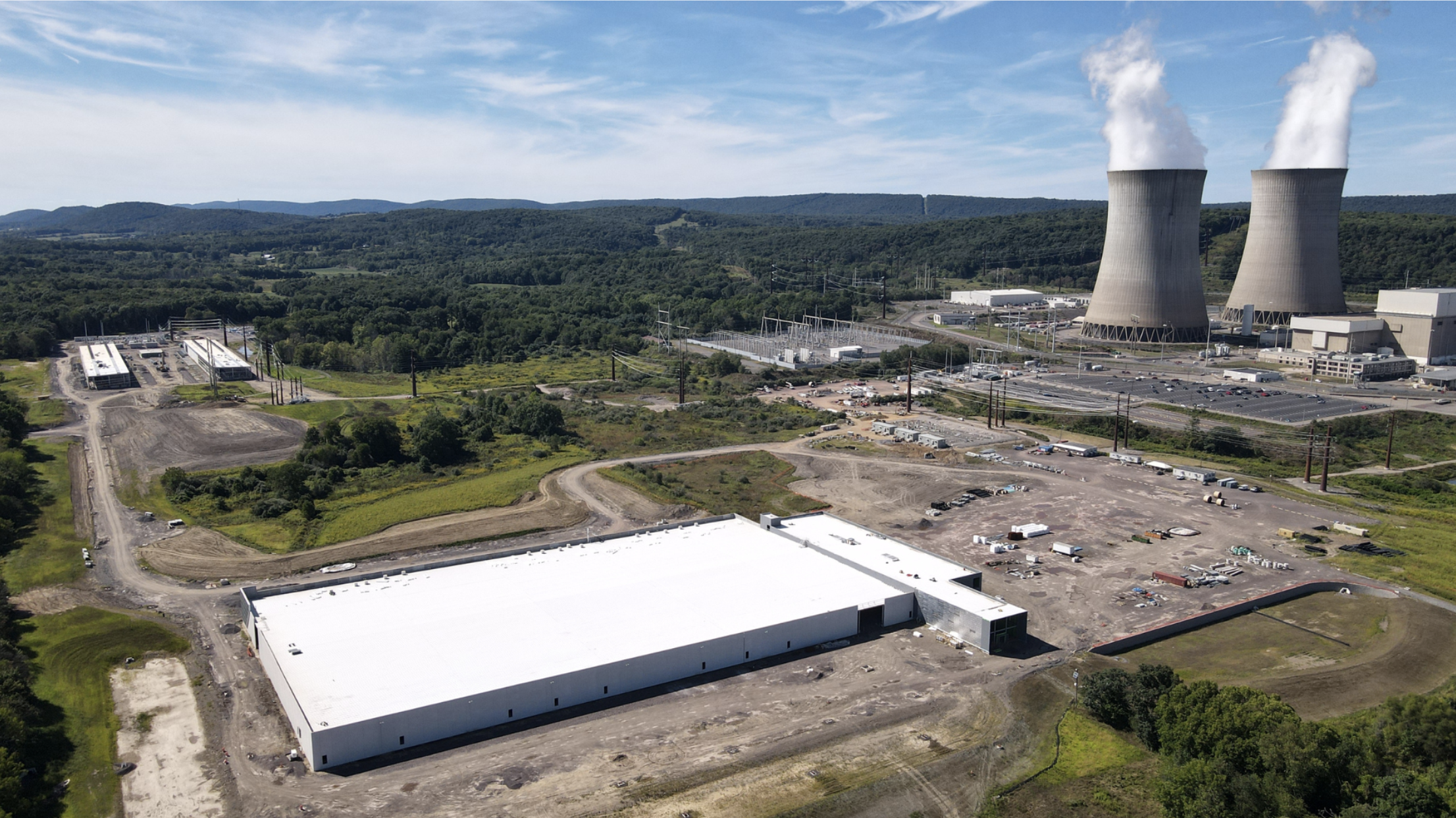
Meta has secured up to 6.6 gigawatts of nuclear power to fuel its next-generation AI infrastructure. Through deals with TerraPower, Oklo and Vistra, Meta becomes one of the largest corporate buyers of nuclear energy in U.S. history. The power will feed its Prometheus AI supercluster in Ohio, delivering 24/7 carbon-free compute at unprecedented scale.
Why it matters
AI is no longer constrained by chips alone. Energy is now the bottleneck. Meta is locking in decades of reliable baseload power while rivals fight for grid access. This is infrastructure warfare disguised as sustainability.
The Deets
- TerraPower Natrium reactors deliver 690 MW each, with expansion options
- Oklo’s Aurora fast reactors add 1.2 GW by 2030
- Vistra provides 2.1 GW from existing plants with upgrades
- Meta covers all costs, shielding consumers from grid impact
Key takeaway
The AI race is shifting from model size to who controls electrons at scale.
🧩 Jargon Buster - Baseload power: Always-on electricity generation that does not fluctuate with demand.
Sources: TLDR AI, AI Breakfast
🧰 Tools & Products
Google Rolls Out Universal Commerce Protocol for AI Shopping

Google has unveiled the Universal Commerce Protocol (UCP), an open-source standard that lets AI agents handle product discovery, checkout, payment and post-purchase support. Built with partners like Shopify, Walmart, Target and Etsy, UCP plugs directly into Search and the Gemini app with native Google Pay checkout.
Why it matters
This is not about shopping faster. It’s about shopping without shopping. Commerce is moving from websites to conversations. Brands that are not agent-ready will simply not be seen.
The Deets
- AI agents can complete purchases mid-conversation
- Business Agents allow branded AI assistants in Search
- Over 20 companies endorsed UCP at launch, including Visa and Stripe
- Designed to interoperate with other agent protocols, not compete
Key takeaway
In the future, your website matters less than your agent compatibility.
🧩 Jargon Buster - Agentic commerce: Shopping flows executed autonomously by AI agents rather than humans clicking pages.
Sources: The Rundown AI, AI Breakfast, TLDR AI
💰 Funding & Startups
Homes Quietly Turn Into Robots
From Prime’s shape-shifting T1 robot to Syncere’s laundry-folding Lume lamp, consumer robotics is pivoting away from humanoid spectacle and toward psychological comfort and task anchoring. Robots now hide in furniture, shift forms, and prioritize coexistence over strength.
Why it matters
Robots that blend into daily life scale faster than those that demand attention. The future home is not full of robots. It is quietly robotic.
The Deets
- T1 shifts between humanoid and four-legged modes
- Lume folds laundry, then disappears back into a lamp
- New systems prioritize safety, limited scope, and trust
- Latency improvements are unlocking sustained physical tasks
Key takeaway
Robotics adoption will be driven by invisibility, not intelligence.
🧩 Jargon Buster - Task anchoring: Designing robots to perform a narrow job in a fixed environment to reduce complexity.
Source: Robotics Herald
🧪 Research & Models
Compute Is Doubling Every Seven Months
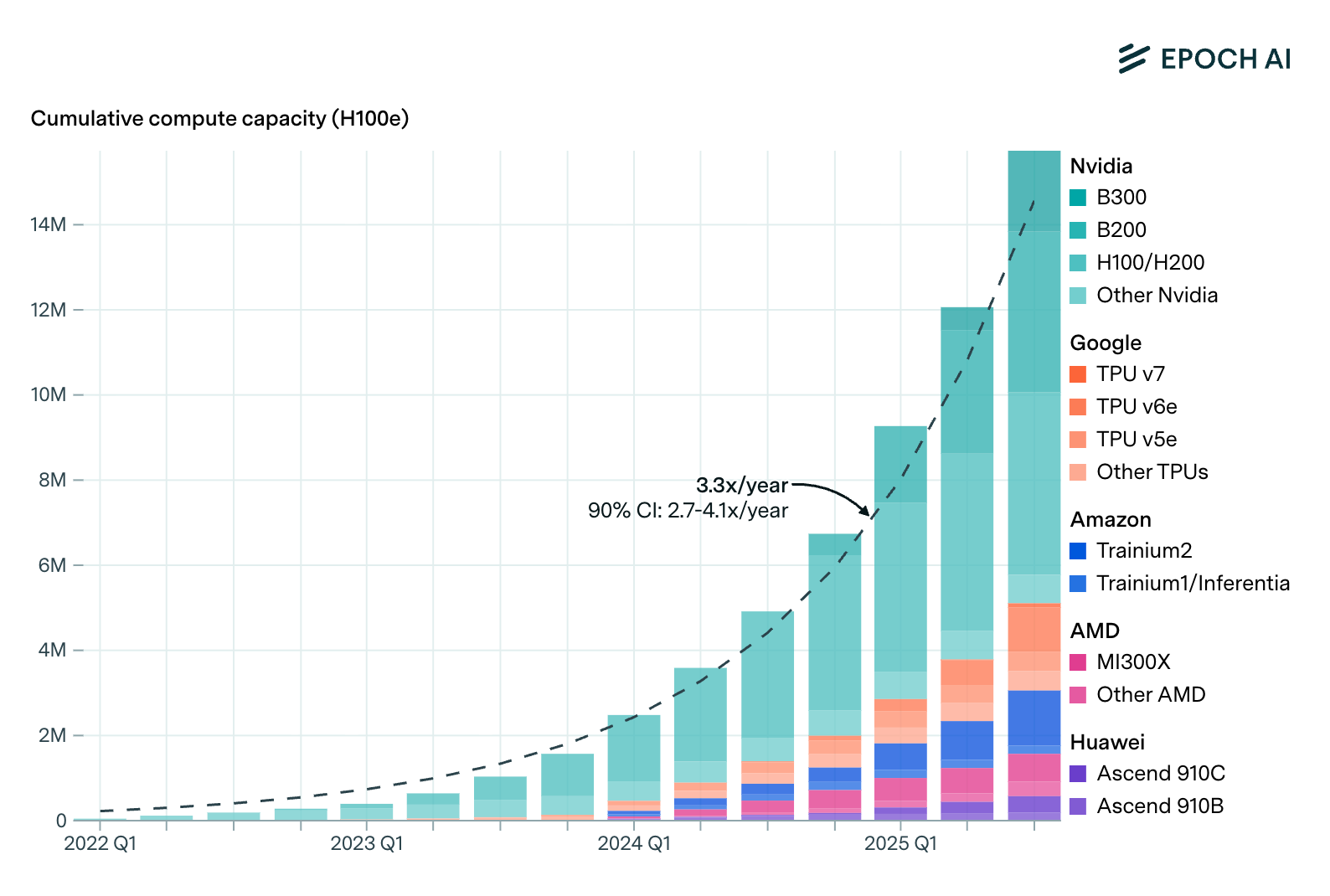
New data shows global AI compute capacity has been doubling roughly every seven months since 2022. Nvidia chips account for over 60% of that growth, with Google and Amazon trailing behind.
Why it matters
This pace enables larger models, longer contexts, and more agentic systems. It also explains why energy, supply chains, and geopolitics now matter as much as algorithms.
Key takeaway
AI progress is compounding, not linear.
🧩 Jargon Buster - Compute scaling: Increasing available processing power to train and run larger models.
Source: TLDR AI
⚡ Quick Hits
- OpenAI launched ChatGPT for Healthcare, a HIPAA-compliant platform rolling out to major hospitals.
- ElevenLabs released Scribe v2, claiming the lowest transcription error rate on benchmarks.
- Mobileye is acquiring Mentee Robotics for about $900M, expanding into humanoid robotics.
- Alibaba’s Qwen team says China has under a 20% chance of overtaking frontier models in 3 to 5 years.
🧰 Tools of the Day
- Bland AI – Automates business phone calls with AI.
- ImageFX – Google Labs’ image iteration tool with style locking.
- Flow – Turn image frames into stitched AI video clips.
Today’s Sources: The Rundown AI, TLDR AI, AI Breakfast, Robotics Herald