
'Genesis' Project Gathers AI Titans; Robot Lead Launches Lab

Today's AI Outlook: 🌥️
AI’s Manhattan Project Moment Arrives
The U.S. Department of Energy has officially launched what may be the most ambitious AI-science collaboration in history: the Genesis Mission.
The initiative brings together 24 major tech companies and 17 national labs, mobilizing roughly 40,000 government researchers to accelerate breakthroughs in nuclear energy, quantum computing, advanced manufacturing, and more. Think: less moonshot, more Manhattan Project energy.
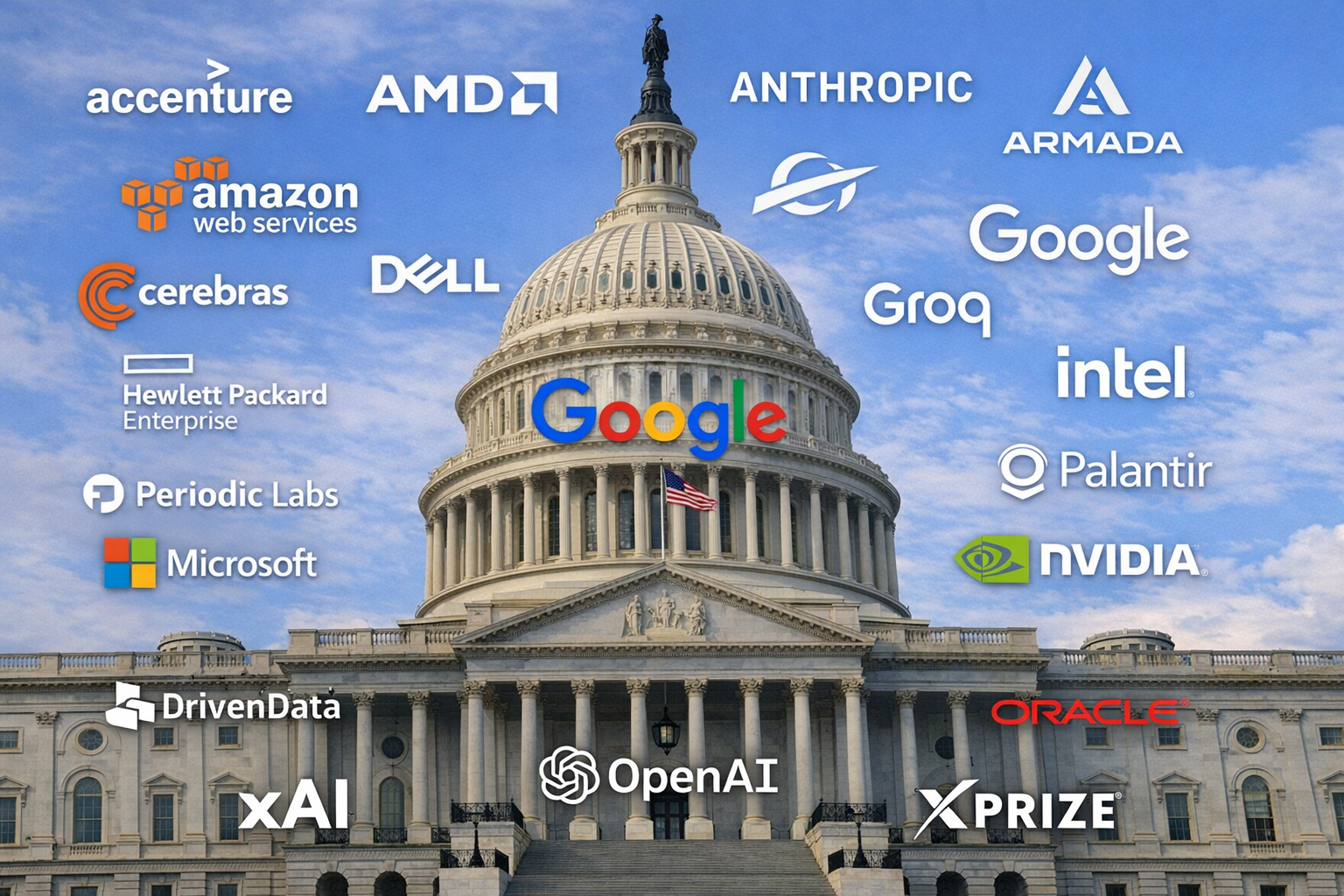
This is not a symbolic partnership. Heavy hitters like OpenAI, Google, Anthropic, Nvidia, Microsoft, xAI, Amazon, Palantir, AMD, Oracle, Cerebras, and CoreWeave are all in. Models are already being deployed on government supercomputers, including OpenAI running workloads on Los Alamos’ Venado system. Google DeepMind is opening early access to tools like AlphaGenome, AlphaEvolve, and its AI co-scientist agent.
Why it matters
For years, AI leadership has been framed as a private-sector race. Genesis flips the script. This is the federal government explicitly coordinating frontier AI labs, cloud infrastructure, and chipmakers toward national scientific goals. It signals that AI is now treated as strategic infrastructure, not just software.
The Deets
- AWS pledged up to $50B in government AI infrastructure support
- 17 national labs unified under a single AI-driven research umbrella
- Early access to frontier research tools previously kept internal at top labs
- Research scope spans energy, materials science, quantum systems, and manufacturing
Key takeaway
The U.S. just formed an AI superteam. If this works, scientific discovery timelines could shrink from decades to years.
🧩 Jargon Buster
National Labs: Federally funded research centers that handle long-term, high-risk science the private sector typically avoids.
Source: The Rundown
🏗️ Power Plays
Update: ChatGPT Becomes a Marketplace
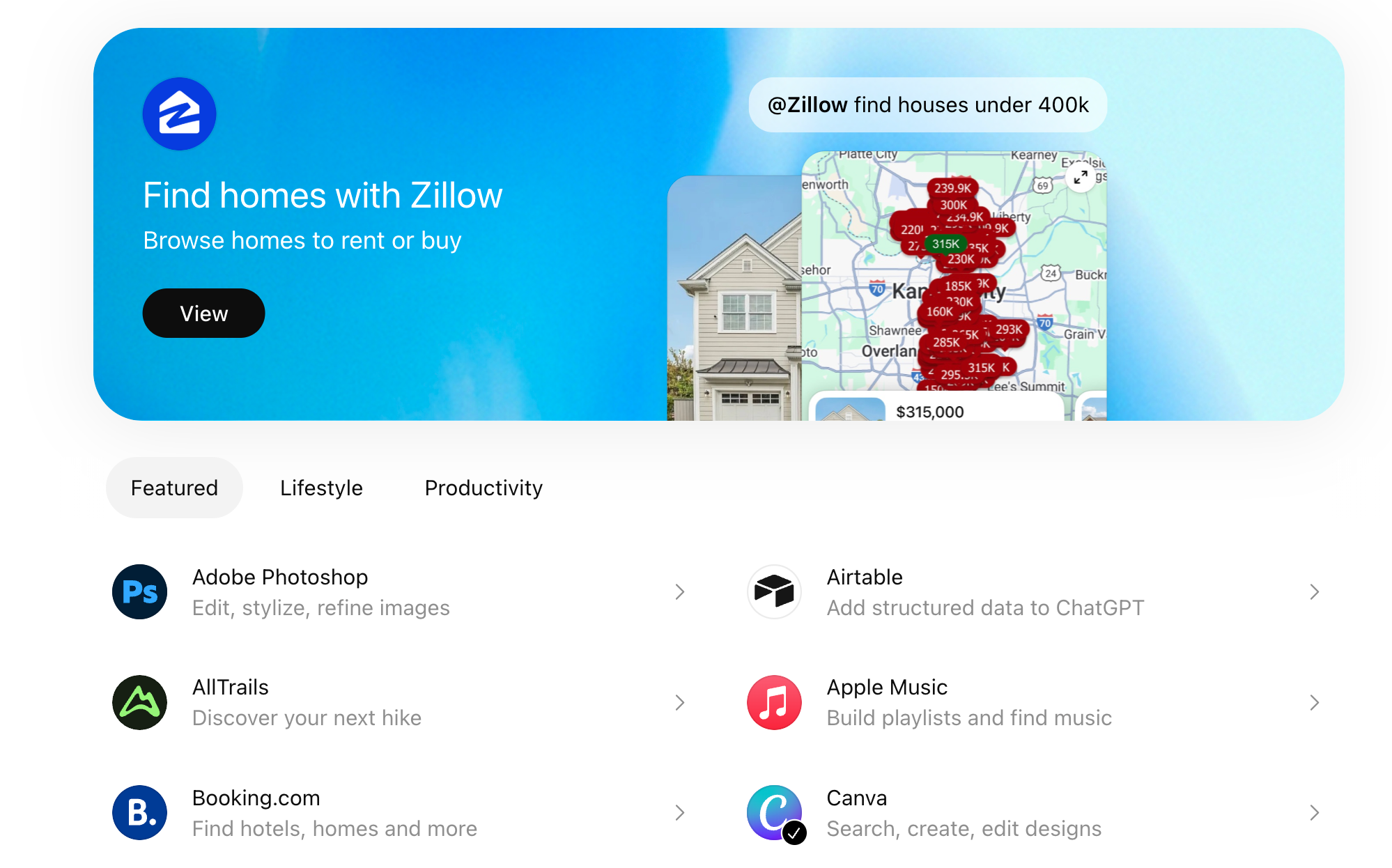
OpenAI has opened submissions for a native ChatGPT App Directory, allowing third-party developers to publish apps that run directly inside conversations. These are not plugins. They are first-class integrations, discoverable, searchable, and embedded where hundreds of millions of users already work.
Apps like Canva, Photoshop, DoorDash, Spotify, and Zillow already live inside ChatGPT, with more on the way. Developers build using OpenAI’s beta SDK and AgentKit, and monetization is starting with external checkout links, with digital goods and deeper commerce planned.
Why it matters
ChatGPT is quietly turning into an operating system for work and commerce. App stores historically convert usage into massive, high-margin revenue engines. With IPO rumors swirling around late 2026, OpenAI needs scalable revenue fast, and distribution beats raw model access every time.
The Deets
- Apps organized into Featured, Lifestyle, and Productivity categories
- Apps triggered by mentions, tools, or conversation context
- Monetization paths expanding beyond links to native digital transactions
- Positions ChatGPT as the default action layer of the internet
Key takeaway
Developers are no longer just building on APIs. They’re building for ChatGPT distribution, and that shifts power fast.
🧩 Jargon Buster - Action Layer: The interface where intent turns into execution, not just answers.
Source: The Rundown, AI Secret
🧪 Research & Models
Agentic Coding Gets Real With GPT-5.2-Codex
OpenAI has released GPT-5.2-Codex, positioning it as a full-fledged engineering agent. Codex now sustains long sessions, survives failed attempts, runs terminals reliably on Windows, and completes massive refactors without losing context.
Benchmarks like SWE-Bench Pro and Terminal-Bench 2.0 show measurable gains, but the bigger shift is behavioral. Codex reads mocks, edits code, runs commands, fuzzes for security flaws, and patches vulnerabilities in one continuous loop.
Why it matters
This collapses the traditional dev stack. IDEs, copilots, security scanners and terminal tools start blending into a single agent-driven workflow. Engineers supervise intent instead of stitching tools together.
The Deets
- Long-context compaction prevents state loss during large projects
- Native Windows terminal support
- Integrated security analysis and vulnerability patching
- Available now to paid ChatGPT users, API pilots incoming
Key takeaway
Coding is reorganizing around agents, not tools.
🧩 Jargon Buster - Agentic: Systems that plan, act, observe results, and iterate autonomously toward a goal.
Source: AI Secret, AI Breakfast
🧠 Tools & Products
Make Claude Code Smarter With Context7
Developers can now supercharge Claude Code by connecting it to the Context7 MCP, allowing Claude to pull live, up-to-date documentation instead of hallucinating APIs or setup steps.
By installing Context7 and setting simple rules in a Claude.md file, users can force Claude to reference official docs every time it generates code, configurations or setup instructions.
Why it matters
Most coding errors from AI come from stale or incorrect context. Context7 turns Claude into a documentation-aware agent, dramatically reducing mistakes.
The Deets
- Works inside Cursor with Claude Code
- Uses API keys to fetch live docs on demand
- Supports explicit doc source enforcement
- Ideal for frameworks, libraries, and fast-changing APIs
Key takeaway
Better context beats better prompts.
🧩 Jargon Buster - MCP (Model Context Protocol): A system that feeds external knowledge into models at runtime.
Source: The Rundown
💰 Funding & Startups
Figure CEO Launches New AI Lab With $100M Personal Bet
Brett Adcock, founder and CEO of Figure AI, is launching a new AI lab called Hark, fully backed by $100M of his own money. The lab will focus on “human-centric AI” with proactive reasoning and continuous self-improvement.
Adcock will continue running Figure, which has raised nearly $2B and sits at a $39B valuation, while Hark’s first GPU cluster reportedly came online this week.
Why it matters
Even as frontier AI consolidates, new labs keep emerging. Founders still believe there are unexplored paths beyond today’s dominant architectures, especially when paired with robotics.
The Deets
- Entirely self-funded
- Focus on proactive, human-aligned intelligence
- Early infrastructure already operational
- Parallel leadership with Figure AI
Key takeaway
The frontier is crowded, but conviction remains expensive.
🧩 Jargon Buster - Human-Centric AI: Systems designed around human goals, values, and collaboration, not just benchmarks.
Source: The Rundown
⚡ Quick Hits
- Lovable raised $330M at a $6.6B valuation, crossing $200M ARR in about a year as “vibe coding” goes mainstream.
- McKinsey is reportedly cutting up to 10% of staff, citing internal AI tools that reduce research and synthesis time by ~30%.
- Google, OpenAI, and Perplexity are offering free AI services in India to grow users and multilingual training data.
- Anthropic open-sourced Claude’s Agent Skills framework for standardized agent management.
🛠️ Tools of the Day
- Lightfield – A CRM that auto-updates from email, calendar, and calls so notes log themselves. More…
- Mistral OCR 3 – State-of-the-art document extraction for text and images. More…
- Ray3 Modify – Edit and reimagine video using start and end frames while preserving performance. More…
Today’s Sources: The Rundown AI • AI Secret • AI Breakfast