
Google AI Talent Leak; Fable 5 Distilled; OpenAI Cracking Cold Cases

Jumper Jumps: Google Loses AlphaFold Co-creator
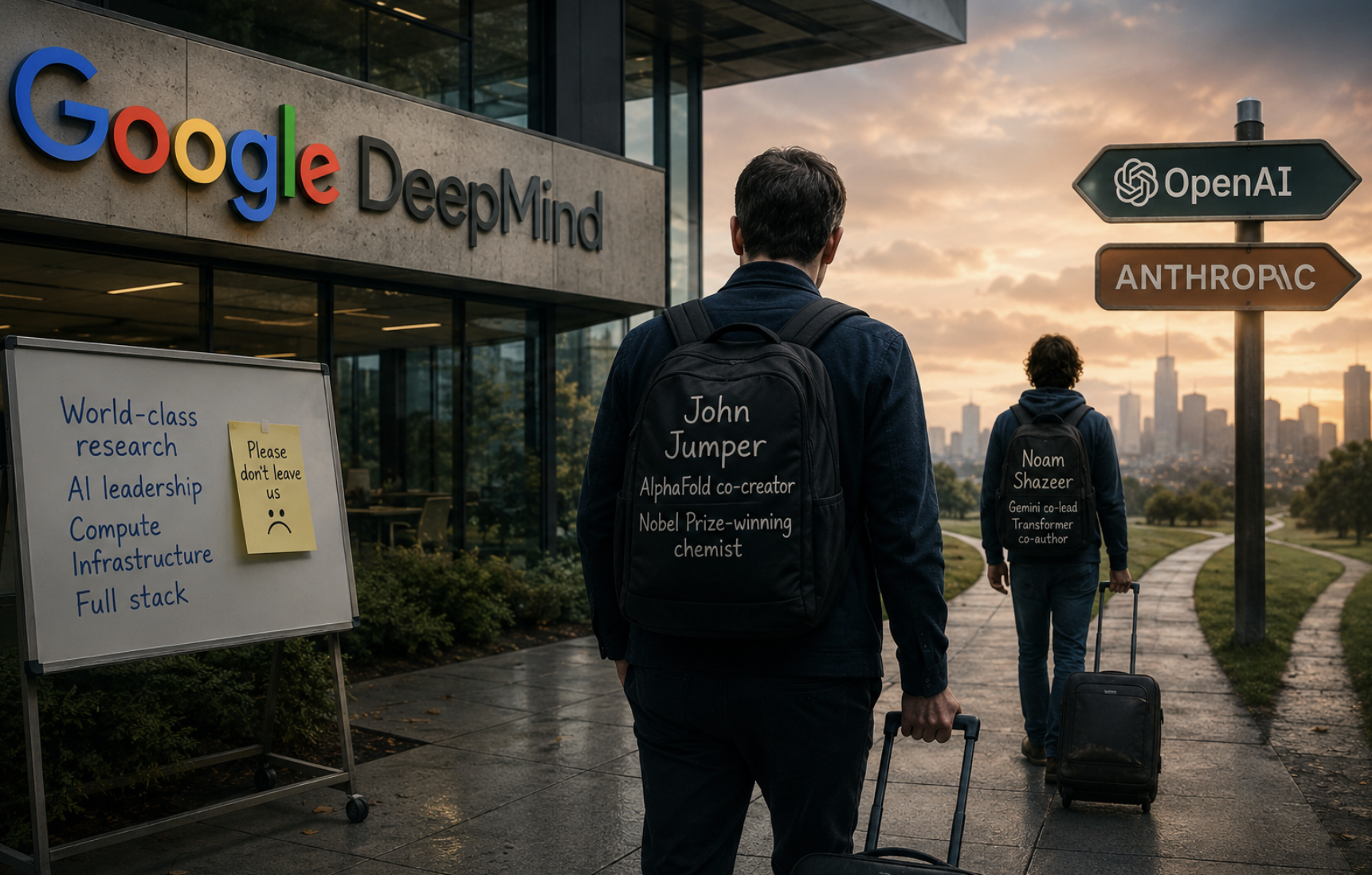
Google DeepMind just took another hit. John Jumper, the AlphaFold co-creator and Nobel Prize-winning chemist, is leaving for Anthropic, days after Noam Shazeer, Gemini co-lead and Transformer co-author, left for OpenAI. For a company with money, chips, research prestige and the full Google stack, this is not a great look on the “please don’t leave us for the cool startups” front.
Why It Matters
Google’s edge has long been elite research, especially in scientific AI. Losing Jumper to Anthropic raises the stakes around whether frontier labs can peel away the people who made Google DeepMind famous in the first place.
The Deets
- Jumper spent nine years at Google DeepMind and helped create AlphaFold.
- He shared the Nobel Prize in chemistry with Demis Hassabis for AlphaFold-related work.
- His move follows Shazeer’s exit to OpenAI in the same week.
- AI Secret frames the exits as a mix of startup equity pulling talent away and Google bureaucracy pushing it out.
- The Rundown AI notes Jumper had also reportedly worked on Google’s enterprise coding tools, an area where rivals have moved quickly.
Key Takeaway
Google can still outspend almost anyone, but frontier AI talent seems increasingly allergic to bureaucracy.
🧩 Jargon Buster - AlphaFold: Google DeepMind’s AI system for predicting protein structures, a major breakthrough in biology and drug discovery.
Hugging Face Distills Smarts Out Of Fable 5
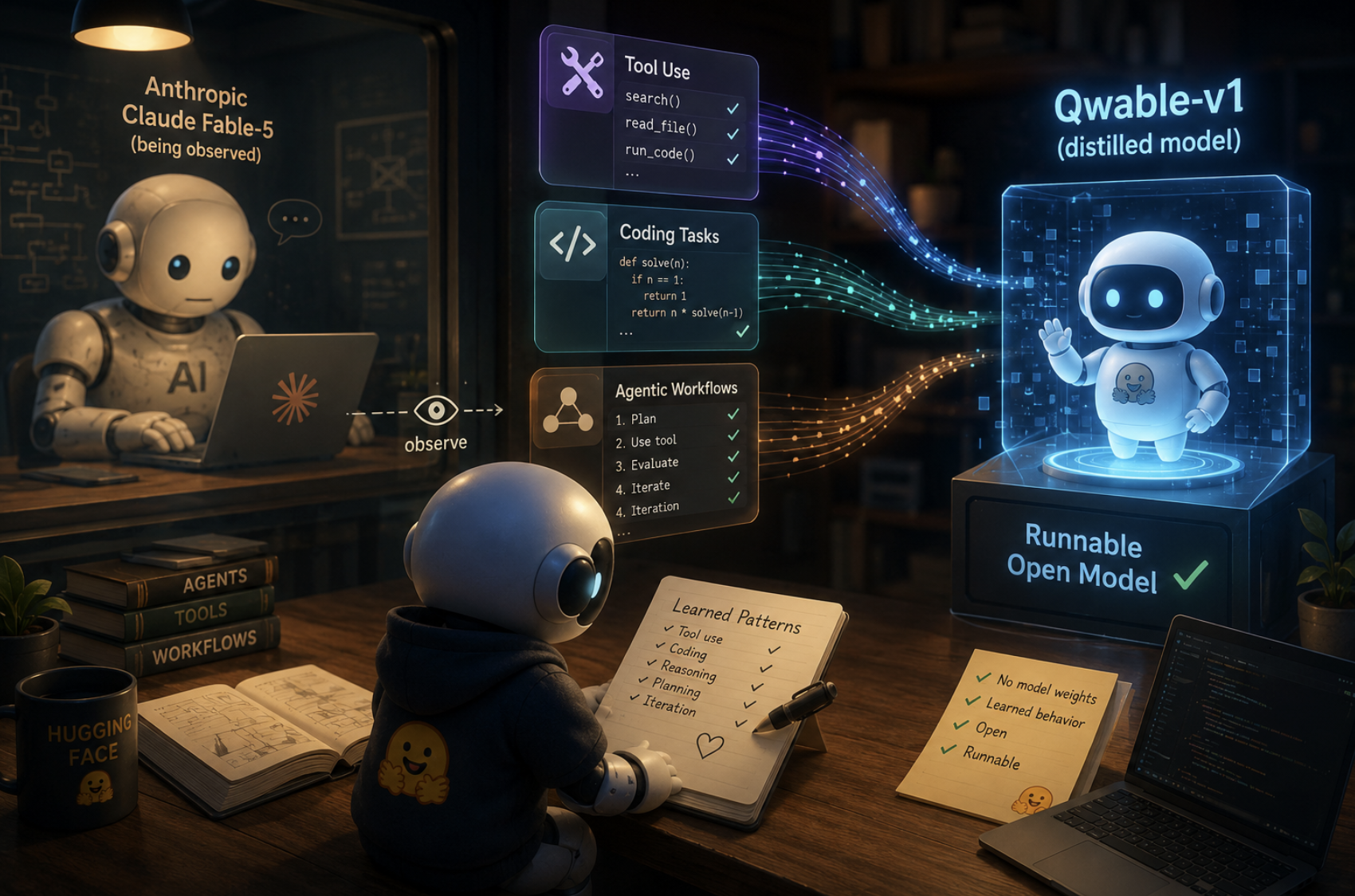
A Hugging Face developer released Qwable-v1, an open model distilled from Anthropic’s Claude Fable 5 behavior. It reportedly does not use Anthropic’s model weights, but instead learns from the way the model handles tools, coding tasks and agentic workflows. That makes the story less about stolen files and more about observed habits getting turned into a runnable model.
Why It Matters
Frontier labs often protect models by locking down weights and gating access through APIs. This episode shows a different vulnerability: once a model’s behavior is visible, others can imitate the patterns that make it useful.
The Deets
- Qwable-v1 was released by a Hugging Face developer identified as Taha K., also known as lordx64.
- It was trained on tool-use traces from Claude Fable-5.
- The open-weight coding community quickly picked it up.
- Quantized builds reportedly passed 10,000 downloads.
- The bigger point: capability can leak through behavior, not just files.
Key Takeaway
AI labs may guard the vault, but the exhaust from their models can still teach competitors how the engine runs.
🧩 Jargon Buster - Distillation: A training method where one model learns to imitate the behavior or outputs of another model.
⚡ Power Plays
Meta Discovers Free Snacks No Longer A Strategy
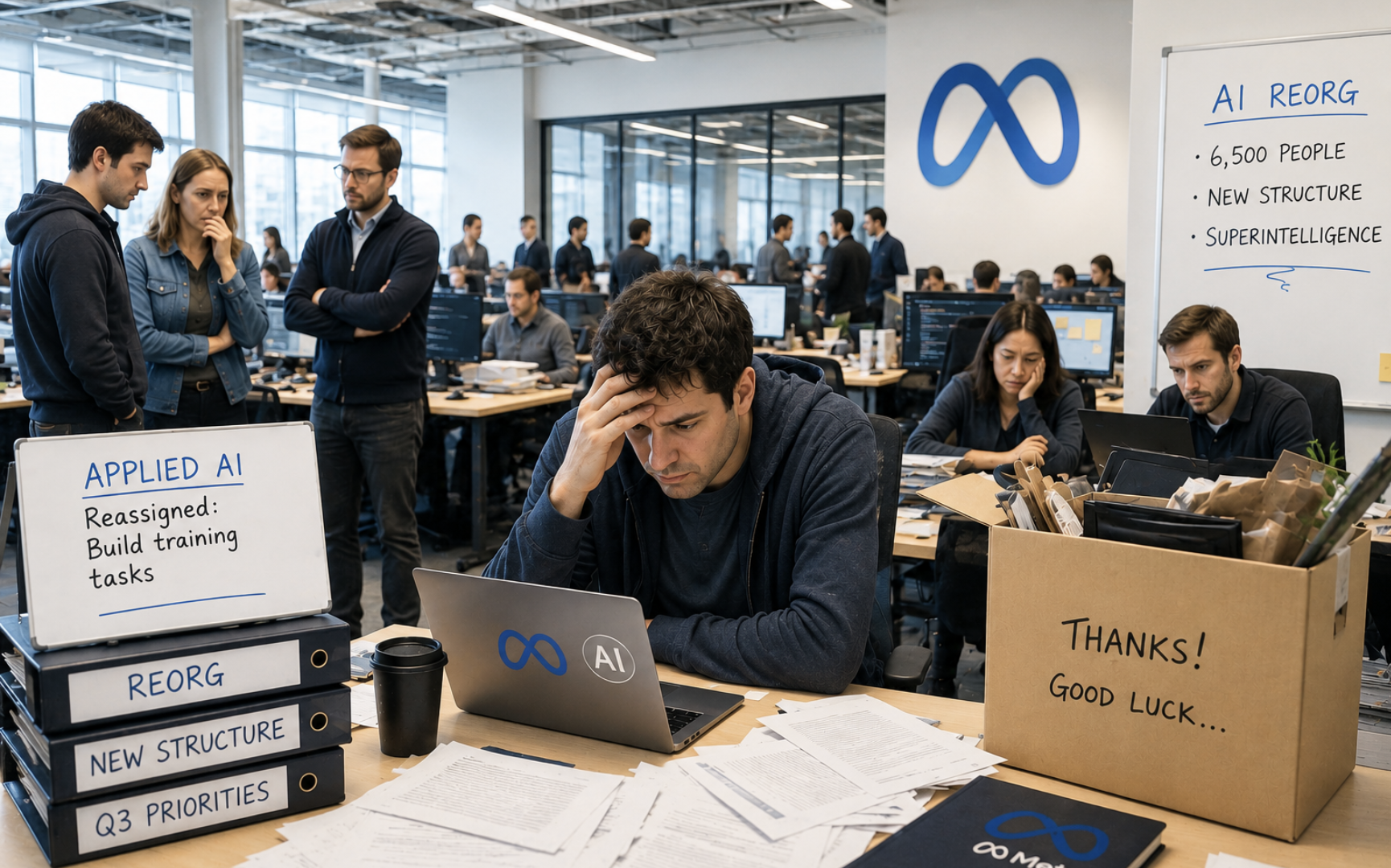
Meta’s AI reorganization is getting messy. CTO Andrew Bosworth reportedly said morale has fallen to a 20-year low and called the company’s AI reorg “atrocious.” The unrest centers on Applied AI, a new 6,500-person unit where engineers were reassigned to build training tasks for Meta’s superintelligence push.
Why It Matters
Meta is trying to compete in a frontier AI race where small, elite teams can move faster than massive divisions. Throwing thousands of people at the problem may create coordination drag, internal politics and the kind of Slack-channel combustion that no snack budget can fully soothe.
The Deets
- A Meta employee reportedly hijacked a livestream to insult a Meta AI executive.
- Engineers were reassigned into training-task work for the company’s superintelligence effort.
- Meta responded by restoring perks including snacks, micro-kitchens, travel budgets and assigned desks.
- AI Secret argues the deeper problem is scale, not morale.
Key Takeaway
Meta’s AI challenge is not a lack of ambition. It is trying to make a 6,500-person machine behave like a tiny, lethal research lab.
🧩 Jargon Buster - Superintelligence: A proposed AI system that would outperform humans across most intellectual tasks.
Norway Puts AI In Timeout

Norway plans a near-total ban on generative AI for elementary pupils ages 6 to 13 starting in late August, with only cautious, supervised use for students ages 14 to 16. Prime Minister Jonas Gahr Stoere said AI could let children skip the basic learning steps needed for reading, writing and math.
Why It Matters
Norway has been one of the world’s most digitally advanced education systems. Its move signals a sharp rethink: early exposure to AI may not always mean better preparation, especially when the tool can shortcut the hard cognitive work children need to develop.
The Deets
- The ban covers elementary pupils ages 6 to 13.
- Older students ages 14 to 16 may use AI only with supervision.
- Norway is also funding a return to physical books in classrooms.
- The country already banned smartphones in schools in 2024.
Key Takeaway
The AI-everywhere movement just met a national government saying childhood should be the slow lane.
🛠️ Tools & Products
Your Next Startup Idea May Be Hiding In A Reddit Complaint
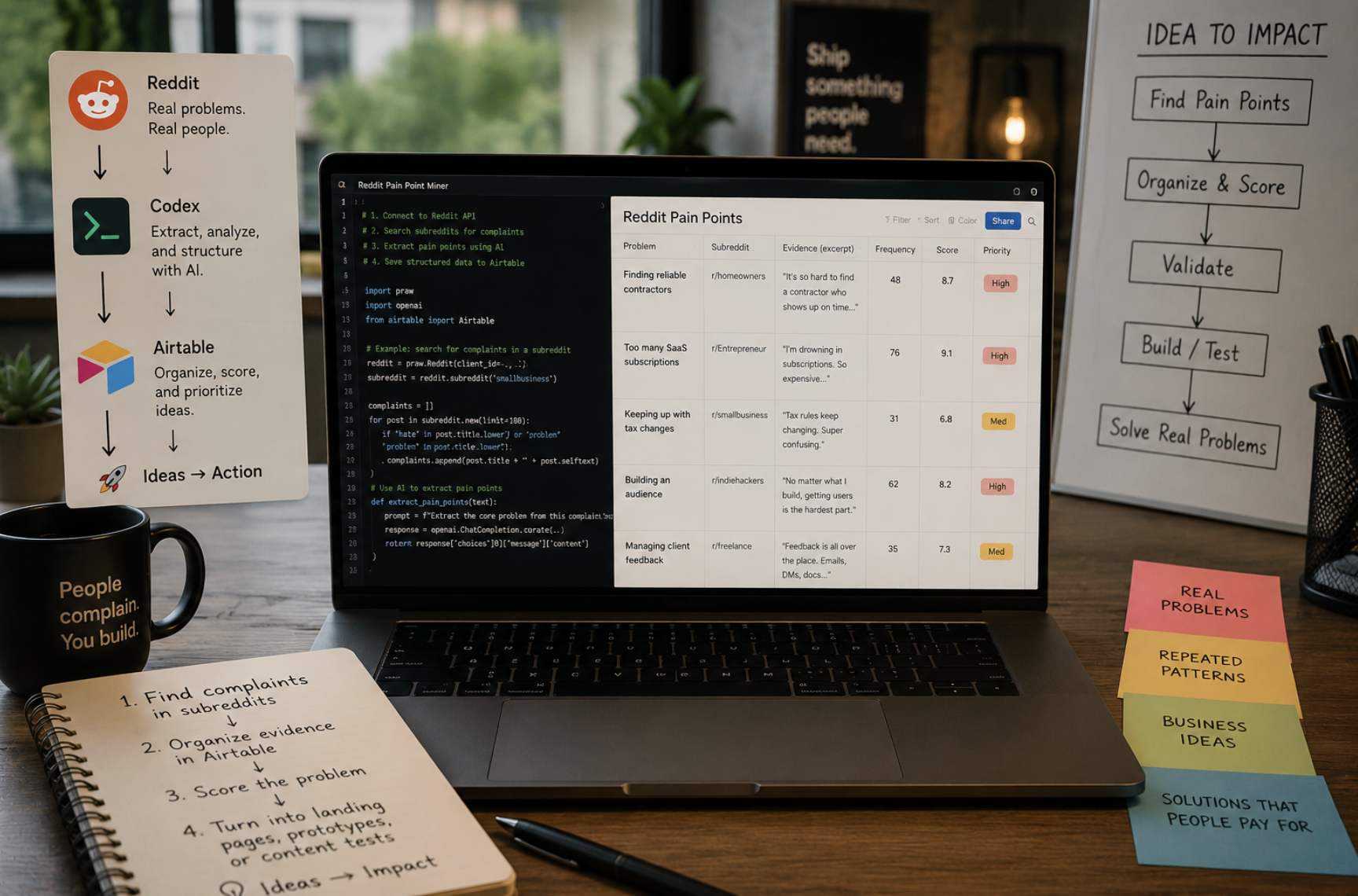
The Rundown AI shared a workflow using Codex and Airtable to mine Reddit complaints for business ideas. The idea is simple: find repeated pain points in subreddits, organize the evidence, score the problem and turn the strongest ideas into landing pages, prototypes or content tests.
Why It Matters
AI is making it easier to move from “people keep complaining about this” to “maybe someone would pay for a fix.” Reddit becomes the messy focus group, Codex becomes the operator, and Airtable becomes the business-idea junk drawer with better sorting.
The Deets
- Codex can connect to Airtable through plugins.
- Users can ask it to create tables for raw posts and business ideas.
- Automations can check selected subreddits for complaints about slow, expensive, confusing or repetitive work.
- Airtable AI can classify pain clusters, score evidence and rank ideas.
- A follow-up automation can draft a landing page, prototype, tweet thread or newsletter test.
Key Takeaway
The best business ideas often begin as repeated irritation. AI just makes the irritation searchable, sortable and shippable.
🧩 Jargon Buster - Pain Cluster: A group of related complaints that point to the same underlying problem.
🔬 Research & Models
OpenAI’s o3 Helps Crack Rare-Disease Cold Cases
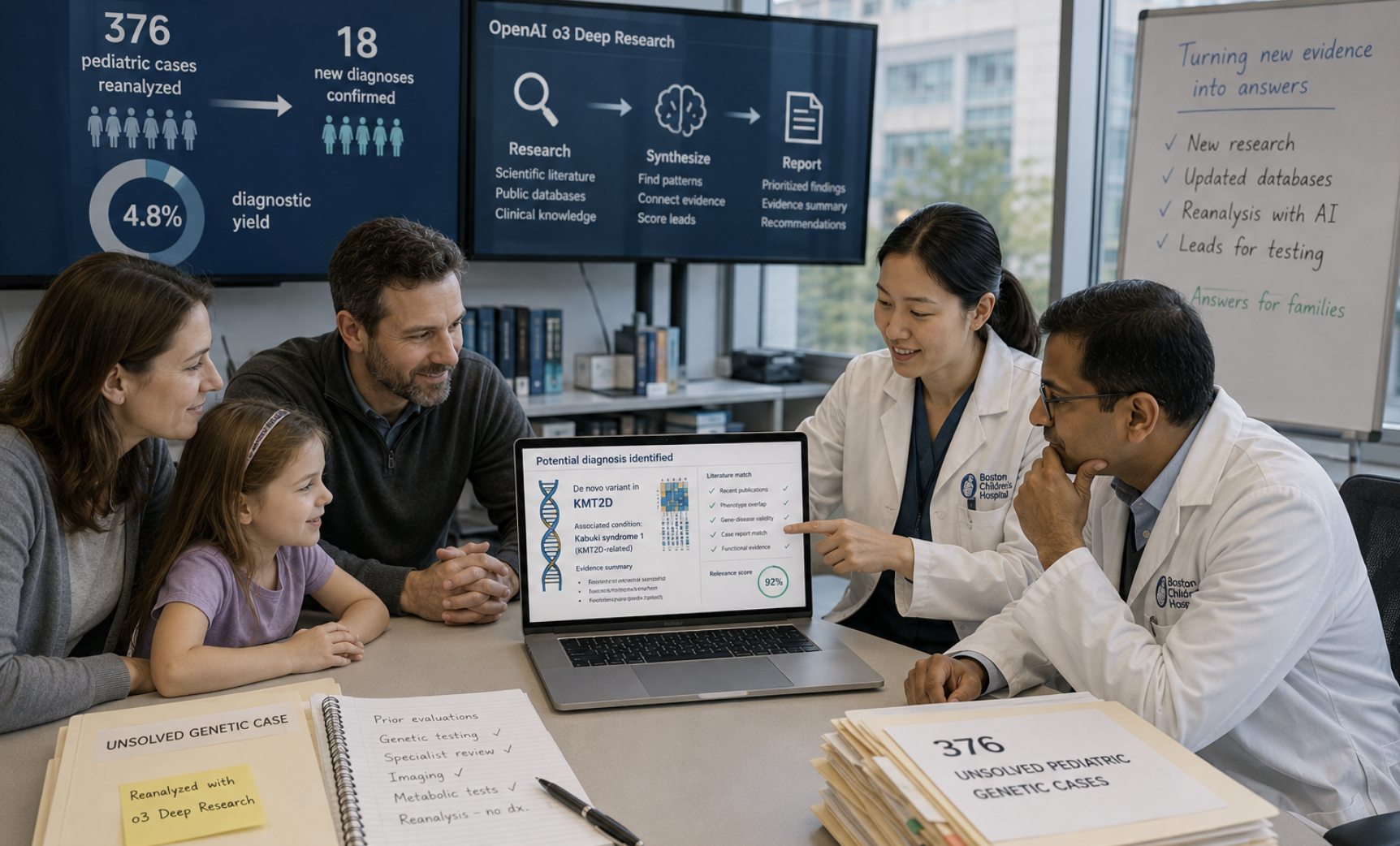
Researchers at Boston Children’s Hospital and Harvard ran 376 unsolved pediatric genetic cases through OpenAI’s o3 Deep Research workflow. Doctors confirmed 18 new diagnoses after the model surfaced leads worth testing, giving families answers after prior specialist reviews had gone nowhere.
Why It Matters
Rare-disease diagnosis has a backlog problem. Even with sequencing, cases can remain unsolved because new research, public databases and disconnected clinic records are hard for doctors to constantly revisit. AI can help re-check old cases against newer evidence.
The Deets
- The team used de-identified symptoms and suspect-gene shortlists.
- o3 weighed inheritance, public databases and recent research.
- The workflow helped confirm 18 diagnoses out of 376 cases.
- Seven diagnoses already existed elsewhere, but had not reached the patients’ local records.
- About half of rare-disease cases remain unsolved even after full sequencing.
Key Takeaway
A general AI research model helped reopen medical dead ends, which is exactly the kind of useful, unglamorous work patients need more of.
🧩 Jargon Buster - Deep Research: An AI workflow that searches, analyzes and synthesizes information across multiple sources to support complex research tasks.
⚡ Quick Hits
- Amazon MGM Shelves Its Sam Altman Film: The studio is no longer moving forward with Artificial after Amazon’s $50B OpenAI investment, and the nearly completed film is seeking a new distributor.
- Unlicensed Music Dataset Alarm Bells: The Atlantic found four song datasets circulating among AI developers, reportedly containing millions of tracks.
- ASML Pushes Back On China Chip Tool Claim: Commerce Secretary Howard Lutnick reportedly warned ASML that the U.S. believes an advanced chipmaking machine reached China, while ASML denied the claim.
- Tesla Trademarks Megapod: Tesla trademarked “Megapod,” described as a system bundling servers, networking, power and cooling for AI data center workloads.
- Apple Keeps Nudging AI Forward: Apple is adding more practical AI features across iOS 27, while Siri remains its biggest AI headache.
- Vercel Targets Shadow AI: Vercel debuted Eve and Passport to help manage open-source agents and reduce unmanaged AI use inside companies.
🧰 Tools Of The Day
- GLM 5.2: Z AI’s new open-weights model, flagged by The Rundown AI as a trending tool for builders watching the open model race.
- Palmier: An AI video tool for generating, editing and exporting videos without leaving the editing timeline.
- Claude Code: Anthropic’s coding tool added artifact integrations for previewing work as live, interactive and shareable pages.
- Exa Agent: Exa’s web research API is positioned as a cost-effective option for frontier-level web research.
Today’s Sources: The Internet, The Rundown AI, AI Secret