
OpenAI Gets Physical; Moxi Hospital Bot; AI Targets Alzheimer’s

OpenAI Expands Robotics Research Toward AGI
What’s Happening: OpenAI is ramping up its robotics division, signaling a renewed push to connect artificial intelligence with physical embodiment.
The company has begun hiring roboticists, control theorists, and simulation experts to build systems that can interpret the physical world through touch, movement, and spatial reasoning.
Insiders say this new effort merges lessons from its early robotics experiments (like the Rubik’s Cube hand in 2019) with the multimodal reasoning capabilities of GPT-5.
Why It Matters: Reinforces the idea that physical embodiment is crucial for reaching AGI.
The Deets: Focused on teleoperation, simulation and human-robot imitation learning.
Key Takeaway: OpenAI is moving from chatbots to machines that move.
🧩 Jargon Buster: Teleoperation — remote control of robots by humans to teach physical tasks through demonstration.
Character AI Blocks Minors From Chatbots

What’s Happening: Character AI will prohibit anyone under 18 from having open-ended chatbot conversations starting November 25, following mounting legal and parental pressure.
Why It Matters: Chatbots’ emotional influence is drawing scrutiny as lawmakers push for child-safety frameworks in AI companionship.
The Deets:
- Teens can still use creative tools for videos and art.
- New age detection AI flags likely minors for verification.
- The GUARD Act could fine companies $100K for violations.
Key Takeaway: AI companionship is facing its first national age wall
🧩 Jargon Buster: Age-Gating — restricting platform access based on verified age to comply with child-protection laws.
Harvard’s PDGrapher AI Targets Parkinson’s And Alzheimer’s
What’s Happening: Harvard researchers unveiled PDGrapher, a model that predicts gene-drug pairings capable of restoring healthy cell states for neurodegenerative diseases.
Why It Matters: Could accelerate therapeutic discovery and reduce trial timelines in diseases that currently have no cure.
The Deets: PDGrapher uses multimodal biological data to map interactions between drugs and genetic pathways.
Key Takeaway: AI drug discovery is shifting from guesswork to precision gene pairing.
🧩 Jargon Buster: Gene-Drug Interaction Model - an AI system trained to predict how certain compounds affect specific genetic mutations.
Moxi 2.0 Masters Hospital Logistics With AI Edge Compute
What’s Happening: Diligent Robotics has launched Moxi 2.0, the latest generation of its autonomous hospital assistant, marking a major leap in healthcare robotics. Built on NVIDIA’s IGX Thor edge AI platform, the new Moxi now offers 10× more computing power, improved manipulation abilities, and advanced environmental awareness. The robot’s intelligence is powered by a foundation model trained on 1.25 million hospital deliveries, allowing it to better understand context, predict workflow needs, and interact naturally with staff and patients.
Since its debut in 2019, Moxi has become a quiet fixture in hospitals - shuttling medications, lab samples, and supplies across wards. With 2.0, Diligent has redesigned the robot’s core systems for dynamic environments, integrating predictive navigation that helps Moxi anticipate obstacles like rolling beds, wheelchairs, and crowded hallways. A new sensor fusion stack combines 3D vision, LiDAR, and natural language inputs so Moxi can respond to human cues - nods, gestures, or spoken directions - without pausing operations.
Moxi 2.0 is now being deployed across 25+ U.S. hospitals, where it operates 24/7 in high-traffic medical corridors. Unlike many research-stage humanoids, Moxi is a commercially viable robot with thousands of logged hours in live clinical settings - a critical distinction in an industry often dominated by prototypes and pilots.
Why It Matters: Real-world hospital chaos is now a dataset. Moxi learns on the job, improving every delivery.
The Deets:
- Operates in 25+ U.S. hospitals.
- Enhanced navigation, manipulation, and conversational cues for staff.
Key Takeaway: Healthcare’s new intern doesn’t take lunch breaks.
🧩 Jargon Buster: Edge Compute - running AI directly on local hardware instead of relying on cloud processing.
Extropic Unveils Thermodynamic Chips With 10,000x Energy Efficiency
What’s Happening: Extropic, founded by ex-Google quantum researchers led by Guillaume Verdon, launched a new class of thermodynamic sampling units (TSUs) that run AI models using probability instead of fixed logic gates. The company claims 10,000× better energy efficiency than current GPUs.
Why It Matters: AI compute demand is skyrocketing, but energy is the limiting factor. Extropic’s approach could redefine chip design by generating “probable solutions” instead of exact calculations, potentially breaking the physical ceiling of Moore’s Law.
The Deets:
- Development kits are already shipping to AI labs and weather-modeling companies.
- The Z-1 chip launches next year, optimized for diffusion-based AI models.
- Extropic released open-source tools to help researchers test probabilistic computing.
Key Takeaway: If Extropic’s math holds up, the next AI race may be about entropy, not silicon.
🧩 Jargon Buster: Thermodynamic Sampling Unit (TSU) - a probabilistic chip that computes by sampling likely outcomes instead of executing deterministic instructions.
Cursor 2.0 Launches Composer Model And Multi-Agent Platform
What’s Happening: Cursor released its first in-house model, Composer, alongside a full 2.0 platform overhaul that lets developers run up to eight agents at once, each handling different parts of a codebase.
Why It Matters: Multi-agent coding transforms development from writing lines of code to orchestrating intelligent collaborators. It pushes programmers toward higher-level architecture and judgment roles.
The Deets:
- Composer runs 4× faster than competitors, finishing most tasks in under 30 seconds.
- Adds web search, voice control, browser testing, and a “team view” for agent collaboration.
Key Takeaway: Cursor just made pair programming feel like managing a squad.
🧩 Jargon Buster: Multi-Agent System - a coordinated network of AI models, each performing specialized subtasks within a larger workflow.
Nvidia Invests In Intel To Expand Supply
What’s Happening: NVIDIA will invest $5 billion in Intel, securing fabrication capacity for its expanding GPU ecosystem.
Why It Matters: Guarantees future supply amid global chip constraints and U.S. reshoring initiatives, while reviving Intel’s relevance in the AI race.
The Deets: Intel gains critical contracts to produce advanced AI chips for NVIDIA’s U.S. factories.
Key Takeaway: Yesterday’s CPU rivals are today’s AI supply partners.
🧩 Jargon Buster: Foundry Partnership - when one chipmaker manufactures another’s designs to expand production capacity.
Chrome Adds Agentic AI For Smarter Browsing
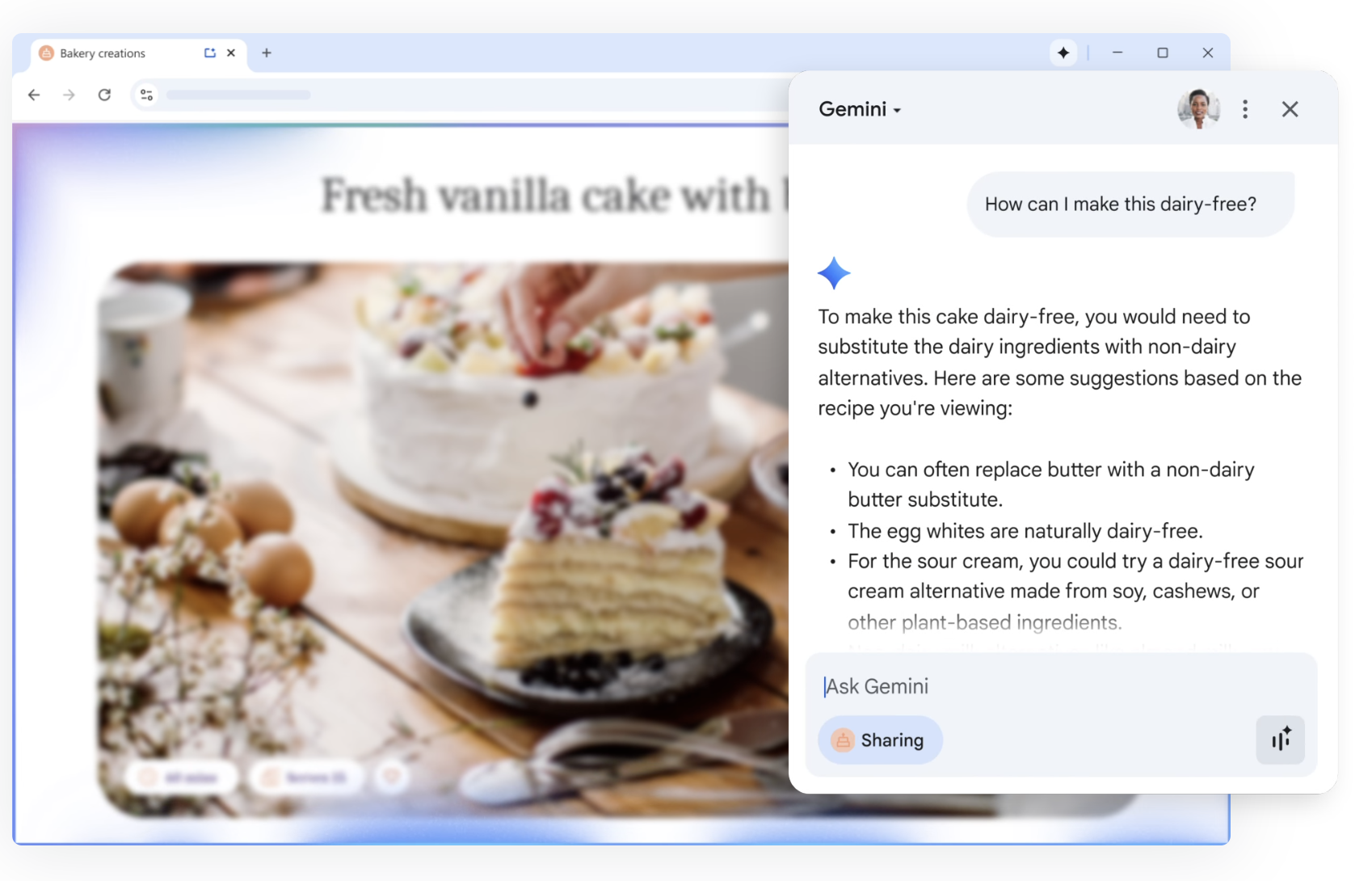
What’s Happening: Google Chrome introduced Gemini Mode, embedding AI directly into the browser for contextual search, task automation and on-page reasoning.
Why It Matters: Browsing becomes active ... not just reading but reasoning.
The Deets: Users can tap Gemini for summarization, autofill, or action execution right from the search bar.
Key Takeaway: The world’s most-used browser just became a co-pilot for the web.
🧩 Jargon Buster: Agentic AI - AI systems capable of autonomously initiating actions toward user goals.
Notion Rolls Out AI Agents For Productivity Automation
What’s Happening: Notion released a suite of AI agents that connect external tools, manage projects, and automate workflows beyond note-taking.
Why It Matters: Productivity software is entering its agentic era, with apps acting on users’ behalf instead of just organizing data.
The Deets: Agents integrate across databases, email, and CRMs, allowing contextual reasoning within workspaces.
Key Takeaway: Notion just went from document hub to digital coworker.
🧩 Jargon Buster: Workflow Automation - AI-driven coordination of tasks across multiple systems without manual input.
Seedream 4.0 Blends Image Generation And Editing
What’s Happening: Seedream 4.0 merges generative AI with editing tools, letting users input text or reference photos for near-instant, style-consistent visuals.
Why It Matters: Generative design is converging with real-time editing, empowering creators to move from idea to finished product in seconds.
The Deets: Supports 4K renders, stylistic presets, and improved motion coherence over v3.
Key Takeaway: Creativity now runs at prompt speed.
🧩 Jargon Buster: Diffusion Model - an AI method that generates images by iteratively removing noise from random patterns.
Circus Deploys Robot Chef In European Supermarkets
What’s Happening: REWE Group’s Düsseldorf Heerdt branch introduced Circus SE’s CA-1 Series 4 cooking robot, capable of preparing fresh meals autonomously.
Why It Matters: Marks the first retail rollout of AI-driven kitchen automation, signaling a new phase of labor replacement in food retail.
The Deets:
- Predictive AI adjusts menus, timing, and portions.
- Expansion under REWE’s “Fresh & Smart” brand already underway.
Key Takeaway: The chef’s hat now comes with a circuit board.
🧩 Jargon Buster: Predictive Cooking - AI systems that adjust recipes and preparation dynamically based on demand and sensor data.
Quick Hits
- 🗣️ Mozilla Data Collective: Open speech dataset spanning 300+ languages.
- ⚙️ Composer: Cursor’s new agentic coding model.
- 📣 Pomelli: Google Labs tool for branded content creation.
- 🤖 Agent HQ: GitHub’s AI mission control for agent management.
- 💬 VoiceType: Speech-to-text tool for 9× faster writing.
- 🔄 Skyvern: AI vision for automating browser tasks.
- ☁️ DeepSeek-R1: Shows “Aha” self-verification behaviors.
- 🩺 Delphi-2M: Predicts 1,000+ diseases years before symptoms.
- 🧑💻 Grammarly Rebrands To Superhuman, launching “Superhuman Go” agent suite.
- 🦾 Foxconn To Deploy Humanoids at its Houston plant to assemble NVIDIA servers.
On This Day in AI History: In 2015, DeepMind’s AlphaGo played its first internal match, quietly kicking off the deep learning era of reinforcement learning that would later define modern AI strategy.
Today's Sources: The Internet The Rundown AI, TAAFT, Robotics Herald