
OpenAI Gets Some Intel; You ❤️ Lovable; Shopping "Infinite Shelves"

AI ‘Godmother’ Calls For Spatial Intelligence
Dr. Fei-Fei Li, often called the “godmother of AI,” is calling for a new generation of spatially intelligent systems that understand the physics and structure of the real world. In a new essay, she argues that the next frontier isn’t more data or bigger models, rather it’s AI that can see, reason and act within space like humans do.
Why It Matters:
LLMs may understand text, but they can’t yet grasp the physical logic of objects and movement. Spatial reasoning could unlock breakthroughs in robotics, science, and healthcare — teaching AI to predict, not just describe, how the world works.
The Deets:
- Fei-Fei Li says spatial understanding is the cognitive core of human intelligence.
- Her lab, World Labs, is developing models that simulate realistic 3D worlds and physical interactions.
- These models will power future robotics, medical imaging and scientific discovery by giving AI a real sense of cause and effect.
- Tech giants like Google and Tencent are racing to build similar “world models” that combine vision, action, and reasoning.
Key Takeaway:
Language unlocked communication. Spatial intelligence will unlock understanding. The next wave of AI will reason with the world, not just about it.
🧩 Jargon Buster: Spatial Intelligence - AI’s ability to perceive, interpret, and interact with 3D environments, using physics-based reasoning to understand movement, distance, and relationships between objects.
More: The Rundown AI
⚙️ Power Plays
OpenAI Poaches Intel’s CTO Amid Market Turmoil
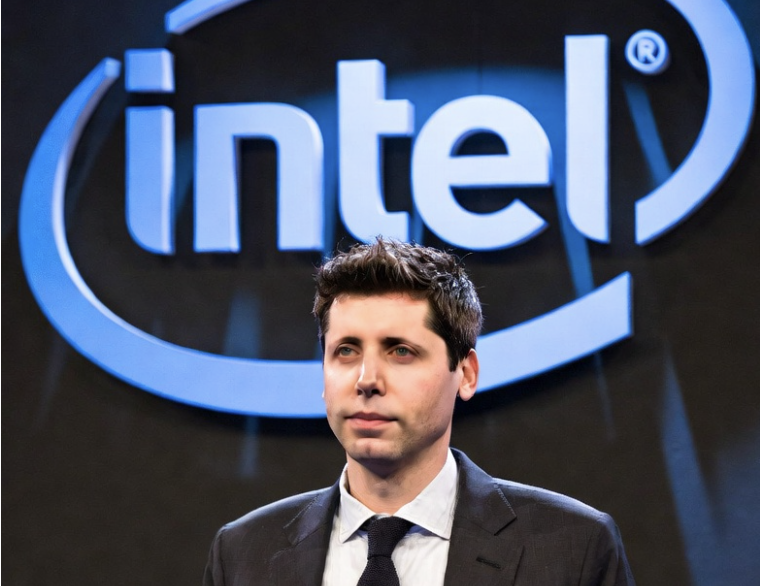
After CFO Sarah Friar’s “AI backstop” comment triggered a $500B market slide, OpenAI quietly hired Intel CTO Sachin Katti, a key architect of the chipmaker’s AI roadmap. Katti’s mission: help OpenAI build and own its compute infrastructure instead of renting it.
Why It Matters:
OpenAI is shifting from cloud dependency to hardware sovereignty - a hedge against GPU shortages and the fragility of partner ecosystems like CoreWeave or Azure. This move signals OpenAI’s determination to control its own AI supply chain from silicon to superintelligence.
The Deets:
- Katti previously led Intel’s global AI and network chip strategy.
- His hiring follows a week of financial turbulence and questions about OpenAI’s spending.
- The company plans to design custom compute clusters and pursue in-house datacenter optimization.
- Analysts see this as a long-term play toward independent infrastructure and reduced reliance on Nvidia.
Key Takeaway:
OpenAI isn’t just building smarter models - it’s building its own brain factory.
🧩 Jargon Buster: Compute Sovereignty - an organization’s ability to own and control the full hardware stack powering its AI models, reducing dependency on external cloud or chip providers.
More: AI Secret
🚀 Tools & Products
Lovable Hits 8M Users, Redefines “Vibe Coding”

Stockholm-based Lovable has exploded from 2.3M users in July to 8M by November, becoming the fastest-growing AI coding platform of 2025. The tool lets users co-create software with AI through natural conversation rather than syntax - what we all call “vibe coding.”
Why It Matters:
Lovable shows that AI coding is no longer a niche. It’s becoming creative, social and massively scalable - where developers are curators and AI is the collaborator.
The Deets:
- 100,000+ new products are built daily.
- Investors value Lovable at $5B, though CEO Anton Osika says they’re “not capital constrained.”
- The platform blends code, design and product generation into a collaborative workspace.
- It’s emblematic of 2025’s shift: programming as a creative act, not a technical one.
Key Takeaway:
Lovable not only made coding easier, it also made it cultural.
🧩 Jargon Buster: Vibe Coding — an emerging AI development style emphasizing intuitive prompts, co-creation, and iterative exploration instead of formal code syntax.
More: AI Secret
🧪 Research & Models
GPT-5 Solves a Full 9x9 Sudoku Puzzle
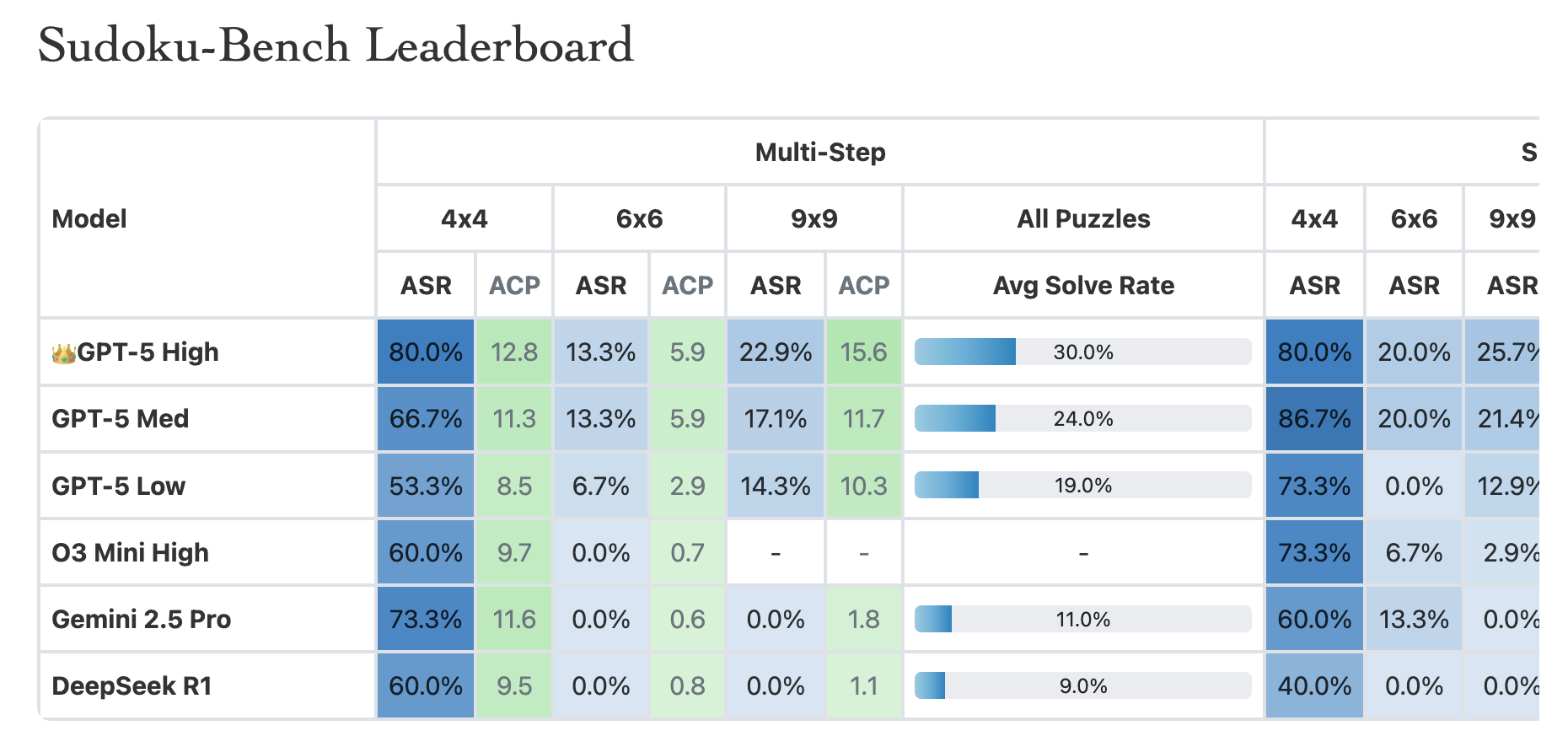
GPT-5 just became the first AI model to solve a complete 9x9 Sudoku puzzle, achieving a 33% success rate on Sakana AI’s Sudoku-Bench. The test evaluates structured reasoning, spatial logic, and creative problem-solving ... all areas where AI has historically struggled.
Why It Matters:
Solving Sudoku may seem trivial, but it demonstrates AI’s emerging ability to combine mathematical precision, spatial awareness and reasoning - foundational for future scientific and robotic reasoning tasks.
The Deets:
- Sudoku-Bench challenges models to combine rule-based reasoning with pattern recognition.
- GPT-5 outperformed all prior models, including Claude and Gemini.
- Remaining failures highlight AI’s limits in meta-reasoning - learning new rules on the fly.
- This benchmark echoes Fei-Fei Li’s call for AI that can reason beyond language.
Key Takeaway:
Sudoku isn’t the goal — it’s the test. The next milestone is reasoning in open-ended, rule-changing environments.
🧩 Jargon Buster: Meta-Reasoning - an AI’s ability to understand and adapt to new or changing rules without retraining.
More: The Rundown AI
🤖 Robotics & Real-World AI
Amazon Turns Whole Foods Into Robot-Powered “Infinite Shelf”
Amazon quietly launched a 10,000-square-foot micro-fulfillment center behind a Whole Foods Market in Pennsylvania, staffed by autonomous “ShopBots” that fetch and restock over 12,000 products. Shoppers can scan in-store QR codes to see - and buy - what’s hidden behind the shelves.
Why It Matters:
The “infinite shelf” merges physical and digital retail, turning every grocery aisle into a portal to Amazon’s full catalog. This hybrid model could redefine logistics, shopping, and how inventory exists in physical space.
The Deets:
- Robots handle multiple temperature zones and restocking loops.
- Fulfil’s system integrates directly with Amazon’s backend supply chain.
- Real-time QR scanning connects in-store experience to online selection.
- A first step toward merging storefronts with fulfillment centers.
Key Takeaway:
Grocery stores aren’t growing - they’re deepening. When robots manage the backroom, retail stops being space and becomes a system.
🧩 Jargon Buster: Micro-Fulfillment Center (MFC) - a small, automated warehouse located near customers to speed up local delivery and pickup.
More: The Robotics Herald
🛠️ Tools Of The Day
- Taku – Build and deploy custom AI apps in your workspace.
- Moondream – Run real-time AI-powered video analysis.
- Hedra – Generate video and images in synchronized batches.
- TRAĒ Solo – Free “Responsive Coding Agent” launching Nov 12 for autonomous software creation.
This Day in AI History: In 2014, Google acquired DeepMind for a reported $500 million, kicking off the modern AI arms race. Back then, the company’s claim to fame was teaching an algorithm to play Atari games. A decade later, its successors are designing drugs, building chips, and writing code that writes code.
Today’s Sources: The Robotics Herald, AI Secret, The Rundown AI