
OpenAI Plays Field; Coke's AI Ads; Robot Subs

OpenAI’s $38B AWS Deal Expands Its Compute Alliance
📌 What’s Happening: OpenAI has signed a seven-year, $38B agreement with Amazon Web Services, marking its largest diversification from Microsoft’s infrastructure to date. The deal gives OpenAI access to hundreds of thousands of Nvidia GPUs across AWS’s global network, with deployment slated for late 2026. It follows a broader $1.4T infrastructure plan spanning Oracle, Google, Nvidia, and Broadcom.
🧠 Why It Matters: The partnership signals both strength and strain ... OpenAI’s compute demand is scaling faster than any other company’s revenue base in history. Altman’s willingness to spread capacity across multiple clouds also marks a shift toward resilience and cost hedging after years of Microsoft exclusivity.
💡 The Deets:
- The deal coincides with Altman’s quip: “If you want to sell your shares, I’ll find you a buyer.” (Note: see yesterday's AI Slop for more.)
- AWS will provide flexible scaling and data locality across continents.
- Amazon stock hit an all-time high following the announcement.
🛎️ Key Takeaway: OpenAI’s infrastructure strategy has evolved into a multi-cloud survival plan, balancing speed, cost, and political risk.
🧩 Jargon Buster: Compute Scaling - expanding the number and power of processors used for training and deploying large AI models.
More: The Rundown AI
Microsoft’s NeoCloud Empire Redefines The Compute Economy

📌 What’s Happening: Microsoft’s latest $9.7B partnership with IREN, following earlier multi-billion-dollar deals with CoreWeave and Nebius, signals an unprecedented acceleration in AI compute capacity building.
These “NeoCloud” alliances transform former crypto miners and regional providers into AI infrastructure outposts, effectively subcontracting hyperscale expansion to private entities. By using these contracts as collateral, NeoClouds leverage billions in debt from Wall Street, enabling data center growth far beyond typical capital cycles.
🧠 Why It Matters: The AI infrastructure boom is beginning to look less like a tech race and more like a financial arms race. NeoClouds are collateralizing future compute, turning GPU supply into a securitized asset class. It’s a historic inversion - instead of infrastructure supporting markets, the market is now underwriting infrastructure.
💡 The Deets:
- CoreWeave, Nebius, and IREN collectively raised over $25B in financing tied to Microsoft contracts.
- CoreWeave used its Azure pact as collateral for a Blackstone-backed debt round.
- Microsoft’s total AI infrastructure commitments now exceed $1.4T over the decade.
🛎️ Key Takeaway: The future of AI isn’t decentralized but rather feudal, built on GPU fortresses backed by debt and governed by hyperscalers.
🧩 Jargon Buster: NeoCloud - a new generation of private cloud firms that lease hyperscale GPU capacity under long-term financing deals with big tech.
More: AI Secret
⚙️ Industry & Infrastructure
AWS Takes The “Calm” Approach To The Compute War
📌 What’s Happening: While Microsoft floods markets with GPU debt through its NeoCloud partners, AWS is positioning itself as the stable, solvent alternative. Its $38B contract with OpenAI embodies this approach - offering compute at scale without the leveraged frenzy. The company’s strategy emphasizes sustainability, diversification and cost discipline rather than speculative expansion.
🧠 Why It Matters: Amazon’s “austerity as a service” philosophy could prove advantageous if the AI infrastructure bubble bursts. Enterprises now face a binary choice between Microsoft’s high-octane expansionism and AWS’s measured capital strategy.
💡 The Deets:
- AWS maintains profitability and long-term credit flexibility amid hyperscaler debt surges.
- CEO Adam Selipsky framed Amazon’s AI push as “responsible infrastructure growth.”
- Analysts expect AWS to gain enterprise share as financial risk rises elsewhere.
🛎️ Key Takeaway: Microsoft is fighting a holy GPU war. AWS is building the monastery that survives it.
🧩 Jargon Buster: Hyperscaler - a company that builds massive cloud infrastructure to handle global-scale compute and storage.
More: AI Secret
Microsoft Ships 60,000 Nvidia Chips To UAE Amid Export Limits
📌 What’s Happening: Despite tightening U.S. export restrictions, Microsoft secured approval to ship over 60,000 Nvidia GB300-class GPUs to the United Arab Emirates. The deal aligns with a $1.4T investment package between Abu Dhabi and U.S. firms across AI and energy.
🧠 Why It Matters: This move underscores how AI geopolitics now run on financial influence, not formal policy. Export restrictions bend under economic gravity when foreign capital is crucial to sustaining America’s AI build-out.
💡 The Deets:
- Shipments approved despite recent White House restrictions on advanced chip exports.
- Abu Dhabi pledged $1.4T for U.S. tech investment through 2030.
- The chips support sovereign AI infrastructure under Microsoft’s Azure partnership.
🛎️ Key Takeaway: The new rule of global AI - chips follow capital, not countries.
🧩 Jargon Buster: Export Controls - government-imposed limits on the transfer of sensitive technology to foreign entities.
More: AI Secret
💡 Creative & Consumer AI
Coca-Cola Doubles Down On AI Holiday Ads
📌 What’s Happening: Coca-Cola unveiled its 2025 holiday campaign powered entirely by AI, reimagining its classic “Holidays Are Coming” series with animal-based characters instead of human actors.
Partnering with Silverside and Secret Level, the company cut production time from 12 months to just 30 days, generating over 70,000 clips with only five artists.
🧠 Why It Matters: Major brands are proving that AI-generated creative is both faster and cheaper, even in legacy industries like advertising. Coca-Cola’s willingness to push through creative backlash signals confidence that AI will soon become the invisible backbone of commercial storytelling.
💡 The Deets:
- Coca-Cola’s AI team produced ads for global TV and streaming simultaneously.
- The company’s 2024 campaign drew criticism for using uncanny AI humans.
- VP Pratik Thakar says AI is now “the center of our marketing transformation.”
🛎️ Key Takeaway: The line between creative work and creative automation has officially blurred.
🧩 Jargon Buster: Generative Video Model - an AI system capable of creating video content directly from text prompts or other inputs.
More: The Rundown AI
🤖 Robotics & Automation
Mimic Robotics Raises $16M To Give Factory Robots Human Hands
📌 What’s Happening: Zurich-based Mimic Robotics raised $16M to scale its “physical AI” system, which trains robotic hands using human motion data from real factory operators. These dexterous hands can grasp, twist and adapt like human limbs, adding fine motor control to existing industrial robots.
🧠 Why It Matters: Instead of chasing humanoid hype, Mimic focuses on the practical holy grail of robotics: grasping in unstructured environments. Success here would revolutionize manufacturing, logistics, and assembly by automating tasks once thought impossible.
💡 The Deets:
- Investors include Elaia and Speedinvest.
- Models trained on motion data from factory veterans.
- Targets tasks like wiring, packaging, and component assembly.
🛎️ Key Takeaway: Real automation starts not with humanoids, but with hands that can learn.
🧩 Jargon Buster: Imitation Learning - a machine-learning technique where AI systems learn by observing and mimicking human actions.
More: The Robotics Herald
Nauticus Turns Legacy ROVs Into Semi-Autonomous Divers
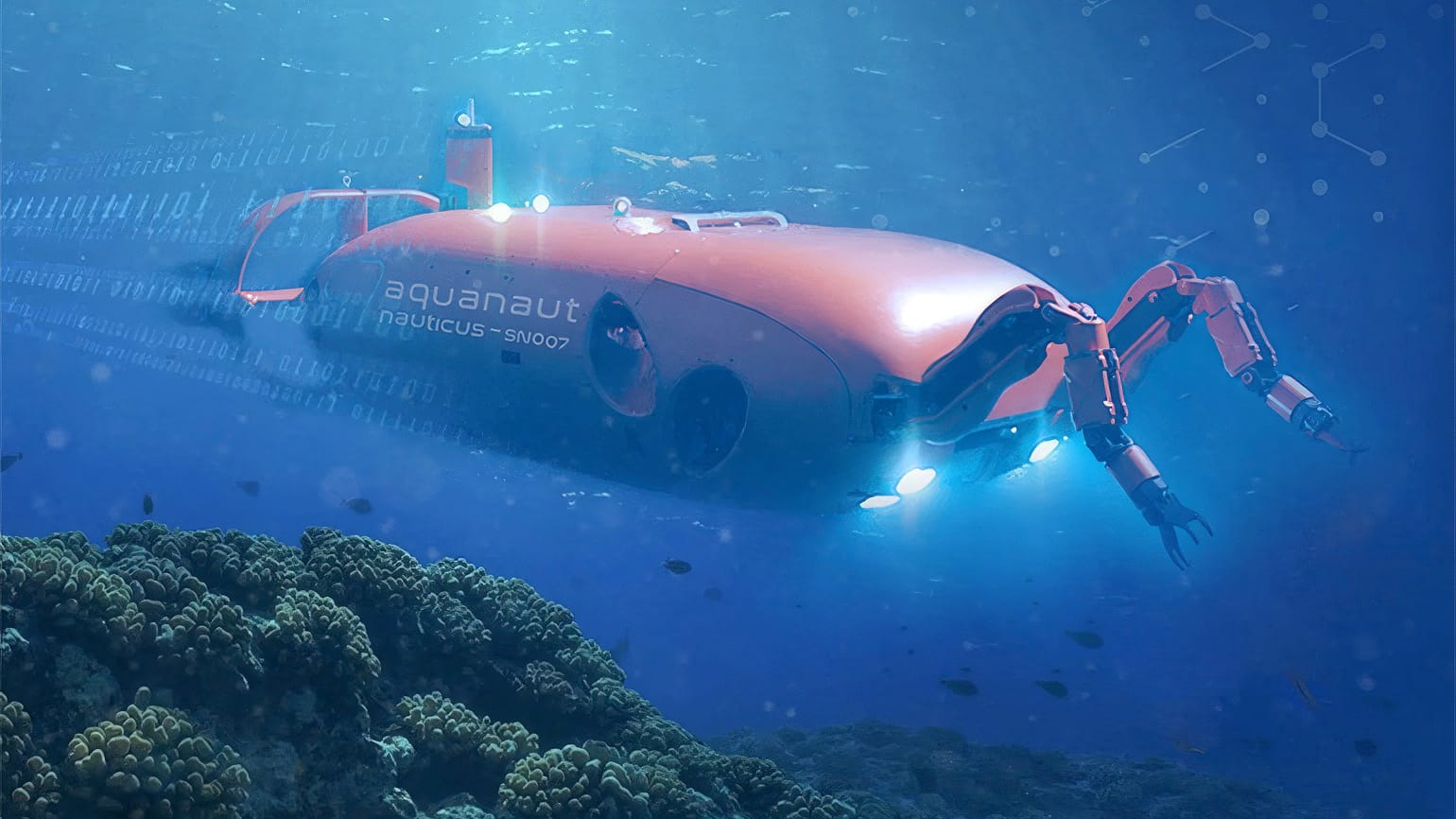
📌 What’s Happening: Nauticus Robotics successfully deployed its ToolKITT autonomy software on third-party remotely operated vehicles (ROVs), transforming decades-old submersibles into semi-autonomous ocean explorers. The upgraded ROVs can now self-navigate and stabilize during missions while human operators focus on objectives.
🧠 Why It Matters: This is a leap for underwater automation, upgrading existing machines instead of building new ones. It demonstrates how software-defined autonomy can modernize industries faster and cheaper than replacing hardware fleets.
💡 The Deets:
- ToolKITT installed on SeaTrepid ROVs for commercial subsea projects.
- AI-driven control loops stabilize ROVs in unpredictable currents.
- Deployed successfully in paid offshore inspection missions.
🛎️ Key Takeaway: The future of robotics isn’t always new machines, but sometimes smarter old ones.
🧩 Jargon Buster: ROV (Remotely Operated Vehicle) - a tethered underwater robot used for inspection, repair, and research tasks.
More: The Robotics Herald
⚡ Quick Hits
- Hippocratic AI raised $126M to expand safe, clinician-built healthcare agents.
- Databricks updated its Agent Bricks and MLflow platforms with new AI governance tools.
- Utopai Studios launched an AI infrastructure JV in Asia for film and TV production.
- Nextracker received $5M in funding to bring robotic workflows to solar farm construction.
- Microsoft announced an $15.2B datacenter expansion in the UAE, adding 80,000 GPUs.
🧰 Tools Of The Day
- Odyssey-2: Interactive AI video model for real-time guided generation.
- Build0: No-code platform for instant enterprise app creation.
- 1stCollab: AI tool automating influencer marketing end-to-end.
- Multifactor: Secure account-sharing via encrypted links.
- CopyOwl: Deep research assistant for topic exploration.
- Momen AI: No-code builder for functional AI apps.
- KaraVideo: Unified video-generation hub for all major models.
Today's Sources: The Internet, The Robotics Herald, The Rundown AI, AI Secret
On This Day in AI History: In 1997, IBM’s Deep Blue team began training its next-generation chess engine for rematch simulations against Garry Kasparov, ushering in a new era of symbolic plus statistical reasoning that still underpins hybrid AI systems today.