
OpenAI Targets Health; LeCun LeLeaving Meta; Monetizing Deepfakes
OpenAI Is Quietly Building Your Next Health Assistant
OpenAI is expanding beyond chatbots into healthcare, developing AI-powered health tools that could evolve into a personal medical assistant - an “always-on” digital doctor that listens, learns and advises.
The company has quietly hired leaders from healthcare and design, including Doximity co-founder Nate Gross and ex-Instagram exec Ashley Alexander, suggesting a serious push into consumer health.

Reports hint that Jony Ive, Apple’s legendary designer, has consulted on hardware concepts for a sleek, voice-driven device that could anchor this ecosystem.
Why It Matters:
AI-driven healthcare has long been Silicon Valley’s white whale. If OpenAI succeeds, it could redefine how people monitor and manage their well-being, bridging the gap between digital convenience and medical-grade care. But it must navigate privacy, regulation and public trust - all hurdles that sank earlier efforts by Google and Amazon.
The Deets:
- Free year of ChatGPT Plus for U.S. veterans and service members leaving active duty
- Partnerships supporting benefits, housing and financial literacy
- CEO Sam Altman reaffirmed AI’s creative limits in interviews, emphasizing emotional authenticity
- Intel CTO Sachin Katti joined OpenAI to lead compute infrastructure efforts
- Legal scrutiny continues, with subpoenas probing OpenAI’s nonprofit ties
Key Takeaway:
OpenAI isn’t just building smarter chatbots - it’s laying the groundwork for AI that lives in your body and your daily life.
🧩 Jargon Buster: Digital health assistant — an AI system designed to interpret medical data and provide personalized guidance, often blending wearable input with generative reasoning.
More: AI Breakfast
💼 Power Plays
Meta’s Chief AI Scientist Maps His Exit
Meta’s longtime Chief AI Scientist and Turing Award winner Yann LeCun is reportedly leaving to launch his own startup focused on world models - systems that learn from spatial and video data instead of text. The move comes after months of internal tension following Meta’s reorganization under AI lead Alexandr Wang.
Why It Matters:
LeCun’s departure marks the end of an era. Meta’s research-first AI legacy is giving way to a faster, more commercial vision under Zuckerberg’s new leadership. The FAIR lab once stood for open science; now, product velocity rules the day.
The Deets:
- LeCun plans to fundraise for a new world-model startup
- Meta cut roughly 600 positions in AI divisions this quarter
- FAIR’s projects have been merged under the new TBD Lab
- Wang’s leadership emphasizes applied AI over research publishing
Key Takeaway:
Meta’s philosopher-engineer is leaving the lab he built, and his exit may prove whether open science or commercial speed wins the AI race.
🧩 Jargon Buster: World model - an AI framework that learns how the real world behaves by predicting spatial, temporal, and causal relationships.
More: The Rundown
🧩 Research & Models
ElevenLabs Launches Celebrity Voice Licensing Platform
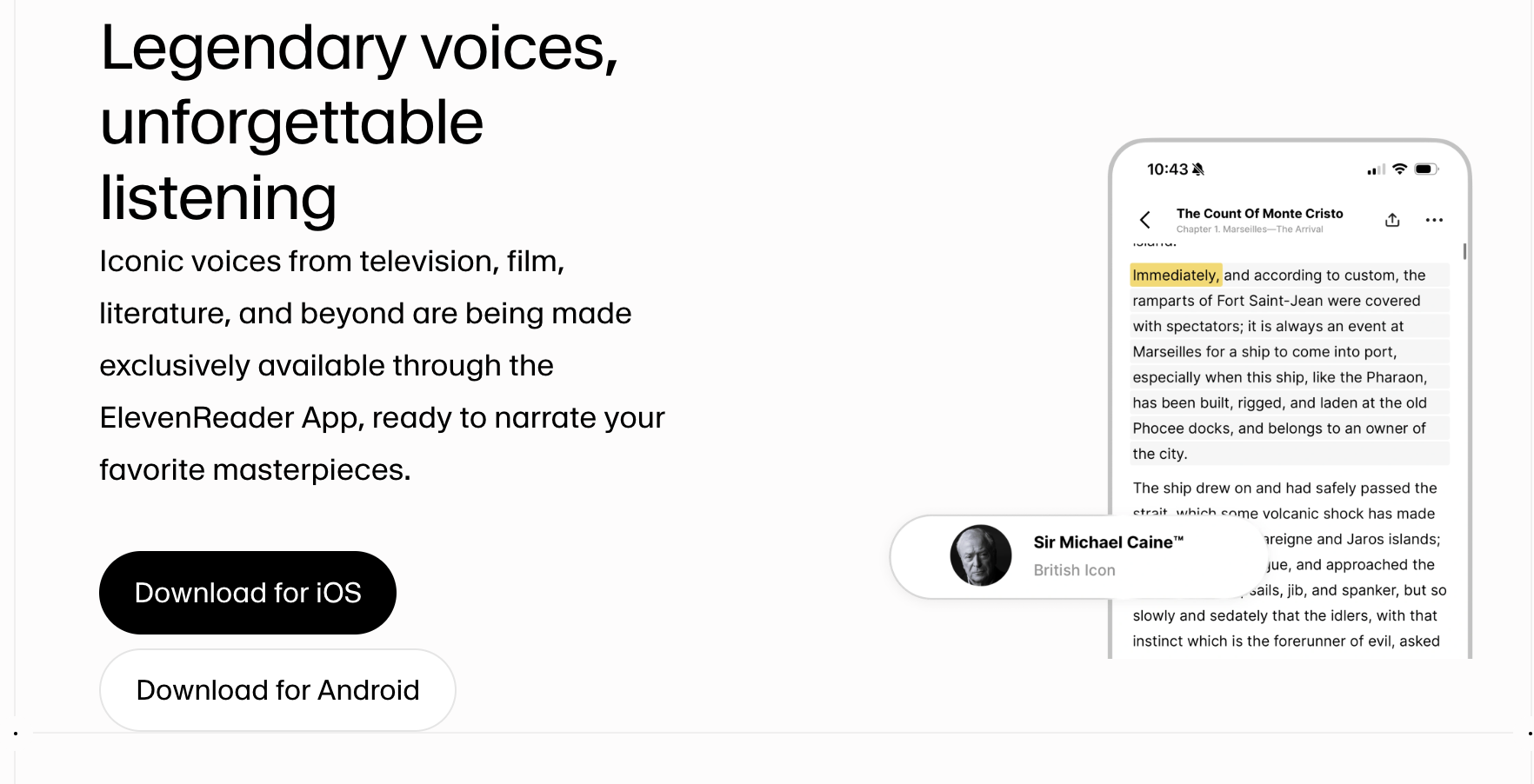
AI audio company ElevenLabs unveiled its Iconic Voice Marketplace, where brands can license authentic, AI-generated voices of living and historical figures.
The platform connects companies directly with rights holders, ensuring transparent and consent-based use. Voices available range from Michael Caine and Liza Minnelli to Alan Turing and Maya Angelou, recreated via advanced archival synthesis.
Why It Matters:
As voice cloning goes mainstream, ethical sourcing becomes vital. ElevenLabs’ marketplace could set a precedent for consent-driven AI likeness licensing - turning “deepfakes” into legitimate digital IP assets.
The Deets:
- Actor Matthew McConaughey using the tech to voice his newsletter in Spanish
- Over two dozen licensed voices available at launch
- Supports advertising, media, and entertainment uses
- Expansion into full “AI likeness” licensing planned
Key Takeaway:
AI doesn’t just mimic people anymore, it now negotiates with them. ElevenLabs is turning synthetic media into a regulated market.
🧩 Jargon Buster: Voice cloning - AI synthesis of speech that replicates a specific person’s vocal tone, pitch, and cadence from limited samples.
More: The Rundown
💰 Funding & Startups
SoftBank Bets Big On OpenAI After 'Ditching' Nvidia
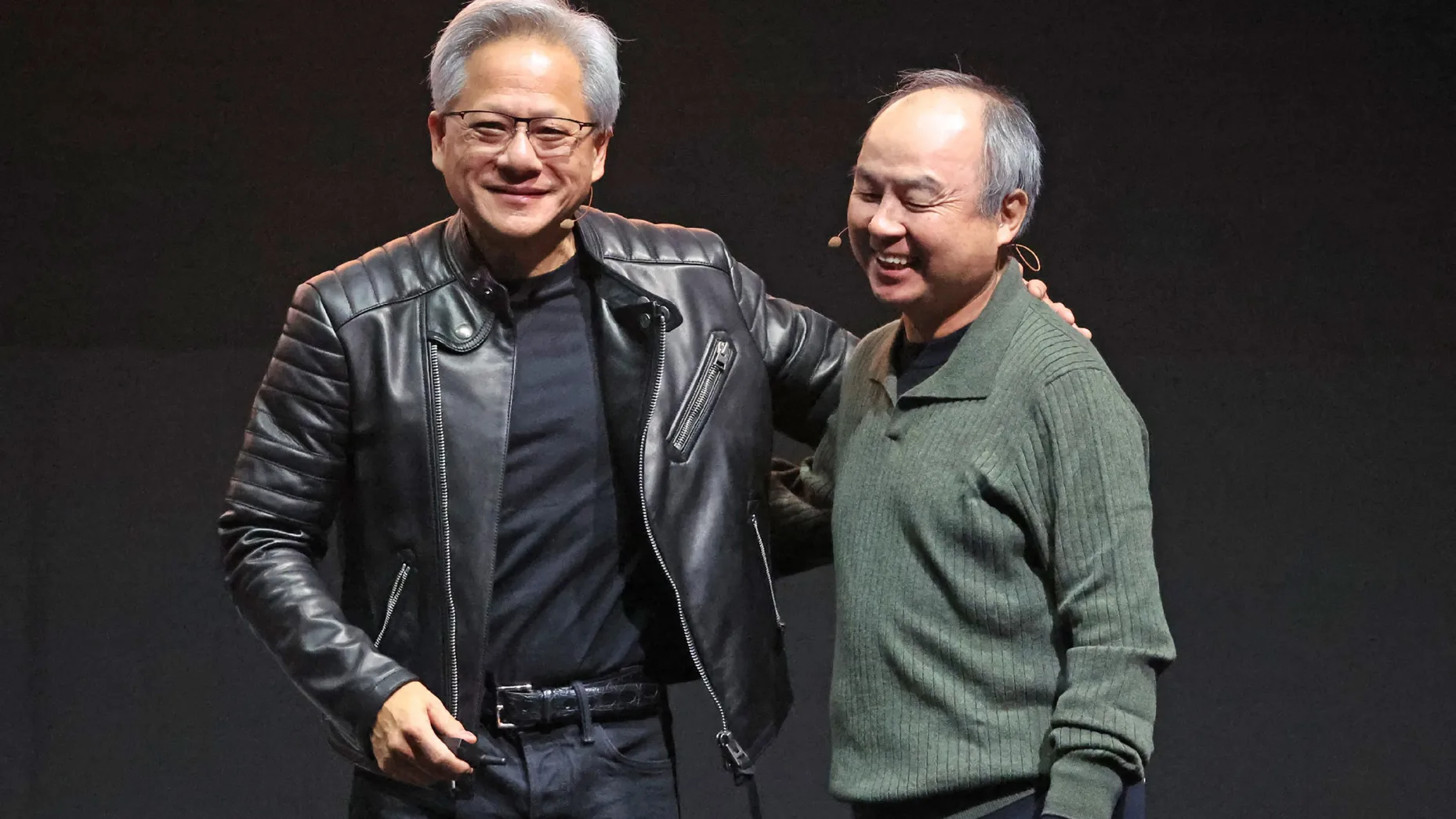
SoftBank sold its entire $5.8 billion Nvidia stake to double down on OpenAI, signaling a massive pivot from chipmaker to AI application backer. CEO Masayoshi Son announced plans to invest $33.2 billion into OpenAI infrastructure and startups aligned with its ecosystem.
Why It Matters:
This is Son’s trademark high-risk, high-reward play - reminiscent of his early Alibaba bet. By divesting from Nvidia, SoftBank is signaling that software and agentic AI, not chips alone, will define the next decade’s trillion-dollar companies.
The Deets:
- OpenAI aims to reach $100B in revenue by 2028
- SoftBank projecting OpenAI will become “the most valuable company in the world”
- Nvidia chips will still power OpenAI’s infrastructure, closing the loop financially
- Son’s concentrated bets have produced both massive wins and historic losses
Key Takeaway:
Son isn’t just betting on AI - he’s betting that OpenAI will be the market.
🧩 Jargon Buster: Agentic AI - autonomous systems that can plan, act, and learn toward user-defined goals, bridging tools and reasoning models.
More: The Rundown
🧰 Tools of the Day
Graphis: AI workspace merging asset management and real-time client collaboration graphis.ai
C1 by Thesys: API for building interactive AI-driven UIs like dashboards or cards thesys.dev
Sensay: AI off-boarding assistant that captures employee knowledge via chat or voice sensay.io
Sheet0: “YOLO mode” spreadsheets that collect, clean and analyze web data automatically sheet0.com
TheySaid 3.0: Conversational survey AI for voice, forms and interviews ... real-time insights, zero setup theysaid.io
In 2004, the University of Ljubljana released Orange, an open-source visual machine learning environment that let users connect models, preprocessing steps, and visualizations without coding. It democratized data science and foreshadowed today’s no-code ML platforms.
Today’s Sources AI Secret, The Rundown, AI Breakfast