
xAI Now SpaceXAI; Home Is Where The Data Are; GPUs Or T-Pee-Yew?

Today's AI Outlook: 🌤️
Musk’s AI Lab Becomes A Compute Landlord
xAI, once positioned as Elon Musk’s answer to OpenAI, is reportedly losing its independence and being absorbed into SpaceXAI as a department. Grok survives, but the company’s center of gravity appears to be shifting from frontier-model moonshot to compute infrastructure, especially after Anthropic agreed to lease SpaceX’s Colossus 1 cluster in Memphis. That puts Musk in the unusual position of helping one of OpenAI’s biggest rivals while Grok keeps trying to catch up.

Why it matters
AI power is moving toward whoever controls the workflows, agents and chips. xAI had brand heat and a huge reported valuation, but Claude Code, Cursor and agentic tools turned AI from chatbot theater into work software. Compute, meanwhile, became the scarce thing everyone needs.
The Deets
- Anthropic will lease all of Colossus 1, a 300-plus-megawatt supercluster with more than 220,000 Nvidia GPUs coming online.
- Claude Code’s five-hour usage caps are doubling across paid tiers, with more API capacity and fewer peak-hour restrictions.
- Musk said SpaceX will rent compute to AI companies taking “the right steps” for humanity.
- The Rundown AI also reported Anthropic is committing to a massive $200B, 5-gigawatt compute deal with Google Cloud.
- AI Secret frames the xAI shift as a company missing the agent and coding waves, then turning into a SpaceX asset.
Key takeaway
In AI, valuation is not a moat. Distribution, developer workflows and compute access are the new gravity wells.
🧩 Jargon Buster - Compute Cluster: A large group of chips, servers and networking gear used to train or run AI models at scale.
A Data Center Bolted To The Garage Wall

Nvidia is backing Span’s XFRA plan to mount mini AI data centers on homes and small businesses. The units sit outside like utility equipment, pulling unused grid capacity through Span smart panels. The idea is already being tested in new communities, turning neighborhoods into a distributed compute network.
Why it matters
AI infrastructure is running out of easy places to go. Hyperscale data centers need land, power, water and time. Span’s pitch is that small, distributed hardware could add capacity faster and cheaper by using existing residential and commercial electrical infrastructure.
The Deets
- Span says 8,000 XFRA units could equal a 100-megawatt data center.
- The company claims the setup could deploy six times faster and cost one-fifth as much as traditional data center expansion.
- The hardware uses Span smart panels to tap unused grid capacity.
- Nvidia’s backing signals that compute expansion is no longer confined to giant cloud campuses.
Key takeaway
AI infrastructure is becoming curbside infrastructure. The next data center may look less like a fortress and more like something mounted next to the recycling bins.
🧩 Jargon Buster - Distributed Compute: A system that spreads computing power across many smaller locations instead of concentrating it in one huge facility.
💪 Power Plays
Synthetic Trading Makes Private AI Even Frothier
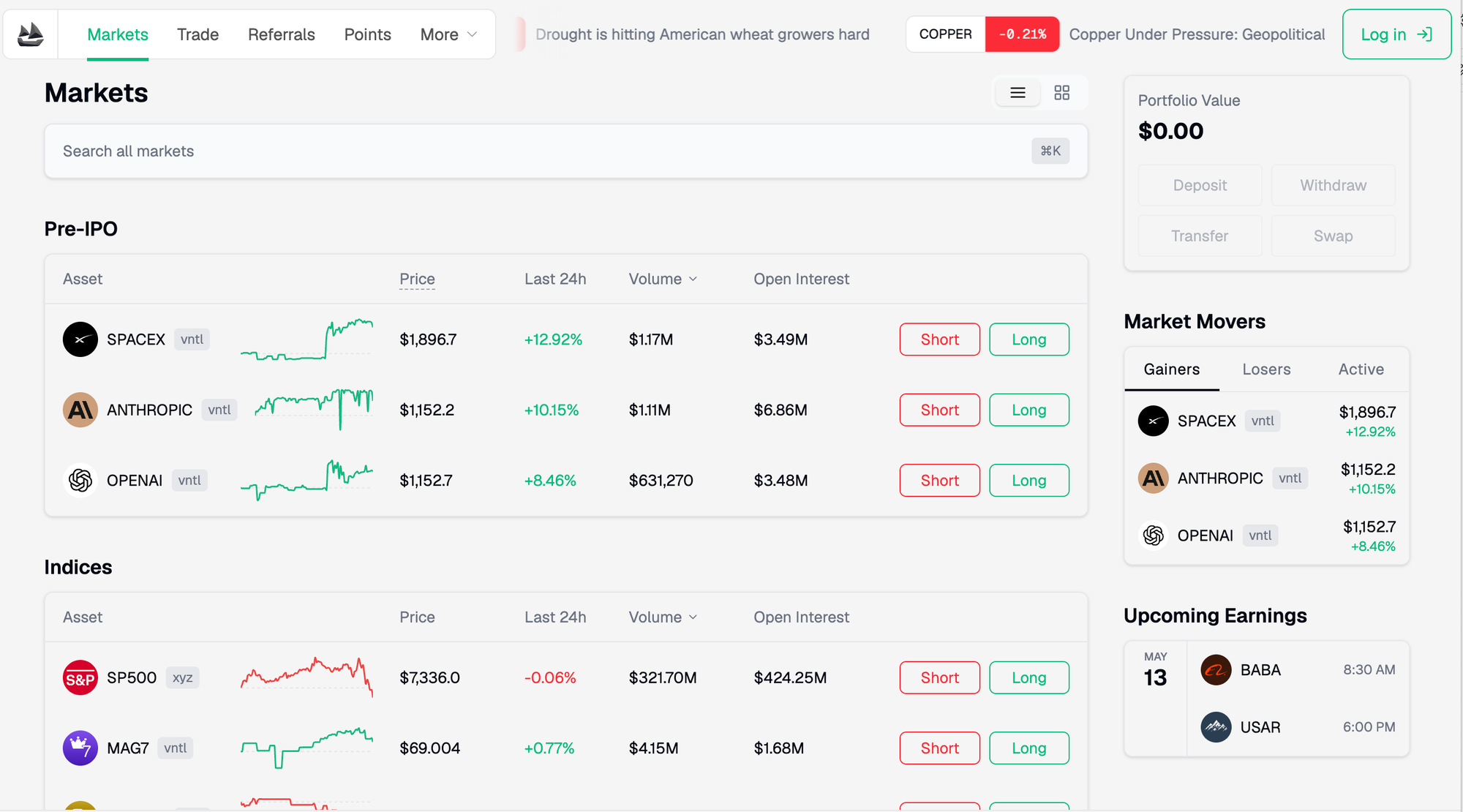
Crypto platforms are offering synthetic exposure to private AI companies like Anthropic, OpenAI and SpaceX, without giving traders real shares. Ventuals uses perpetual futures, while PreStocks claims SPV-linked exposure. The result is retail speculation that looks like equity but may not carry meaningful ownership rights.
Why it matters
Private AI valuations are already frothy. Synthetic markets can make the froth look tradable, liquid and official, even when the legal claim underneath is thin. That can distort expectations, amplify panic and drag real private-market pricing into crypto’s volatility blender.
The Deets
- Traders can bet on implied valuations for private AI companies without owning actual shares.
- AI Secret reports Anthropic hit an implied valuation of $1.6T on one platform.
- Combined volume reportedly topped $1.1B.
- The risk is not only retail losses, but synthetic pricing bleeding into real investor psychology.
Key takeaway
A fake door is still a door if enough people run through it. AI equity speculation is becoming a market story, even when the equity part is doing a lot of pretending.
🧩 Jargon Buster - Perpetual Futures: A crypto-style contract that lets traders bet on an asset’s price without owning it and without a fixed expiration date.
Murati Calls Out Altman In Musk Suit

Former OpenAI CTO Mira Murati testified by video deposition in Elon Musk’s lawsuit against OpenAI, accusing Sam Altman of misleading her about whether a model could skip safety review and creating leadership chaos by giving conflicting directions to executives. The testimony revisits the 2023 OpenAI board crisis, a saga that continues to generate fresh shrapnel.
Why it matters
Musk’s lawsuit depends partly on painting OpenAI’s leadership as untrustworthy. Murati’s testimony gives that argument a prominent former insider, though whether it directly proves Musk’s legal claims is still for the jury to decide.
The Deets
- Murati said Altman told her OpenAI’s legal team cleared a model to skip safety review, which she later found was false.
- She said Altman gave conflicting instructions to executives, undermining her CTO role.
- Murati briefly served as interim CEO during Altman’s 2023 firing.
- Former OpenAI board member Helen Toner also testified and criticized Murati’s handling of the crisis.
Key takeaway
The OpenAI board drama has become AI’s litigation multiverse. Every deposition adds another timeline.
🧩 Jargon Buster - Safety Review: A formal process used to evaluate whether an AI model poses unacceptable risks before release or deployment.
🛠️ Tools & Products
Claude Design Turns Messy Spreadsheets Into Strategy Decks
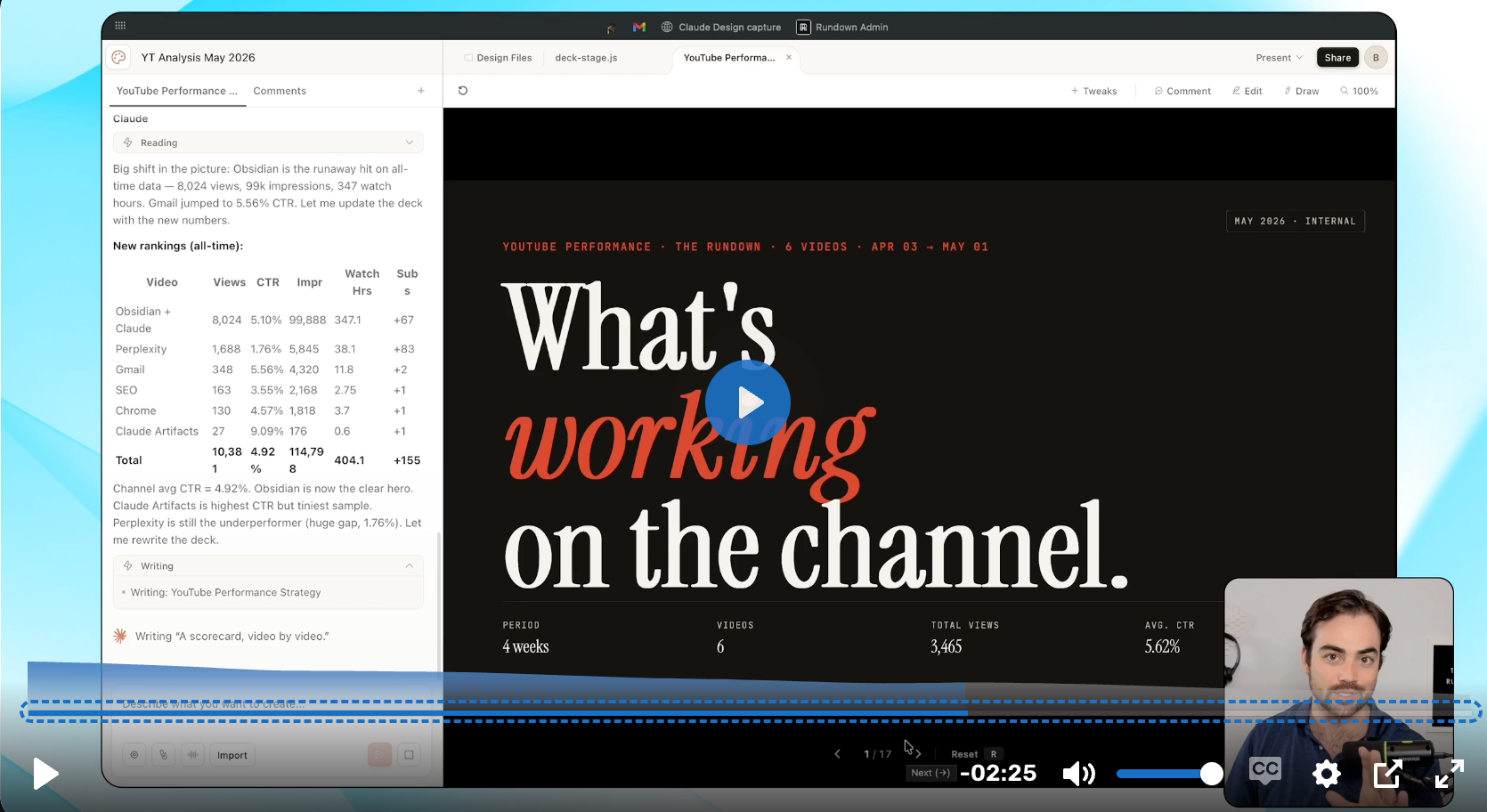
Claude Design’s slide-deck feature can turn a raw CSV or messy spreadsheet into a strategy presentation with charts, rankings, recommendations and speaker notes. This workflow from The Rundown AI is aimed at teams that need analysis and a usable deck, not just prettier slides.
Why it matters
This is where AI products get practical. The value is less “make me a slide” and more turning scattered performance data into something a team can actually discuss, ship and defend in a meeting.
The Deets
- Users upload a CSV, spreadsheet or messy report.
- Claude Design can generate a strategy deck with charts, insights and recommendations.
- The feature supports speaker notes and exports to PowerPoint or Google Slides.
- The suggested use case includes YouTube channel data, Facebook ads and performance reporting.
Key takeaway
The office deck is becoming an AI workflow. Middle management has entered the chat.
🧪 Research & Models
Google’s TPU Has A Nvidia-Sized Problem
Google is trying to push its TPU chips into the external AI infrastructure market, but neocloud buyers are still overwhelmingly choosing Nvidia. According to AI Secret, Nebius says demand is still 99% Nvidia GPUs, CoreWeave is following customer demand and Lambda’s CFO said the company “bleeds green.”
Why it matters
TPUs may be powerful inside Google, but the broader market runs on Nvidia’s ecosystem. CUDA, resale value, customer familiarity and cluster availability all reinforce the GPU default.
The Deets
- Google wants TPUs to compete beyond its own infrastructure.
- Major neocloud buyers are not showing broad demand.
- Anthropic appears to be the major external buyer, tied to Google’s reported investment and compute commitments.
- Nvidia’s software and buyer trust remain the hard part to dislodge.
Key takeaway
A chip can be technically strong and still lose the market if customers prefer the ecosystem around its rival.
🧩 Jargon Buster - TPU: Google’s Tensor Processing Unit, a specialized chip designed to accelerate AI workloads.
DeepMind Sends AI Agents Into EVE Online’s Space Economy
Google DeepMind took a minority stake in Fenris Creations, a spinoff from CCP Games, to use an offline clone of EVE Online as an AI research testbed. EVE’s long-running universe includes player corporations, markets, alliances and massive battles, making it a richer environment than a simple game board.
Why it matters
DeepMind has used games before, including Atari, Go and StarCraft. EVE gives researchers a messier world where agents need memory, planning, social reasoning and long-term strategy. That makes it a better proxy for real-world complexity.
The Deets
- EVE Online has run for more than two decades on a single server.
- DeepMind will test AI agents in an offline EVE clone.
- The research will focus on long timelines, memory and reasoning.
- Fenris’ CEO described EVE as an environment that behaves like a living world.
Key takeaway
AI agents are graduating from games with winners to worlds with consequences. Space capitalism remains undefeated.
🧩 Jargon Buster - AI Agent: Software that can plan, act and use tools toward a goal, rather than only responding with text.
⚡ Quick Hits
SubQ Goes Long: Subquadratic debuted SubQ, a model it says has a 12M-token context window and a 52x speed boost on long tasks.
DeepSeek Eyes A Bigger Bag: Chinese AI startup DeepSeek is reportedly nearing a funding round that could value it as high as $45B. Source:
Google Tunes Up Music AI: Google partnered with Believe, the parent of TuneCore, to bring Flow Music and Lyria 3 Pro to artists.
Stripe Talks AI Pricing: Stripe published a five-step framework for pricing AI products, drawing on approaches from companies including Anthropic, Clay and Vercel.
IBM Wants The C-Suite Rewired: IBM’s CEO study argues leaders need to customize their AI mix, consider chief AI officers and coordinate human and artificial intelligence by 2030.
🔨 Tools Of The Day
Claude Managed Agents: Anthropic added “dreaming,” outcomes and multi-agent orchestration, letting agents study past sessions, grade work and split complex jobs.
GPT 5.5 Instant: OpenAI’s new default ChatGPT model was listed among trending tools.
Realtime TTS-2: A voice AI tool designed to listen and match user tone and emotion.
Memoket: A context-memory tool that captures conversations so users do not have to brief AI from scratch every time.
OpenAI MRC: OpenAI teamed with AMD, Intel, Nvidia, Microsoft and Broadcom to open-source a tool that helps giant AI training runs survive hardware failures.
Today’s Sources: The Internet, AI Secret, The Rundown AI