
Clawdbot Takes Control While Claude Is Everywhere; Soft, Strong Robots?

Today's AI Outlook: ☀️
Clawdbot Brings “Local-First Agents” Out Of The Lab And Into Your DMs
Peter Steinberger, the Austrian-born engineer behind PSPDFKit (now Nutrient), is back with Clawdbot, an open-source AI assistant that blew up over the weekend, jumping to 15k to 20k GitHub stars in a matter of days. The pitch is simple and a little terrifying: run an agent locally, give it real computer access, and let it operate like a privacy-first digital employee across WhatsApp, Telegram, Discord, and Slack and more.
Unlike most assistants that politely wait to be asked, Clawdbot is built for agency. It can control Chrome to book flights, scrape sites, fill forms, and check you in, and it can also run file operations and shell commands. It keeps persistent memory so it can carry context across days, and it supports swapping in models like Claude, OpenAI, or local models, plus 50+ integrations like Gmail, GitHub, Spotify, and Home Assistant.
Why it matters
The “agent future” is starting to look less like a single super-app in the cloud and more like software you run on your own machine with full tool access. That is empowering for power users and a security nightmare for the careless. The upside is control, privacy, and customization. The downside is that “no guardrails” is not a vibe, it is a threat model.
The Deets
- Installs on Mac, Windows, Linux, even Raspberry Pi, with a quick setup.
- Runs a Gateway process handling channels via WebSocket, plus lightweight nodes for heavier actions.
- Real-world use cases cited include logging calories from meal photos, morning automations that clear inboxes and prep calendars, and 24/7 “dusty laptop agents” running workflows nonstop.
- Critics call it “a wrapper with browser control,” but the differentiator is shipping proactive cross-channel execution that is self-hosted and free.
- Security trade-offs are real: it has system access, and setup can involve quirks like Claude token issues.
Key takeaway
Local-first agents are crossing the line from novelty to normal, and Clawdbot is a loud reminder that the next productivity leap might come with root access.
🧩 Jargon Buster - Agency: When an AI does not just suggest steps, but takes actions like clicking, typing, saving files, and running commands.
♟️ Power Plays
Anthropic Preps “Security Center” As Claude Code Demand Spikes
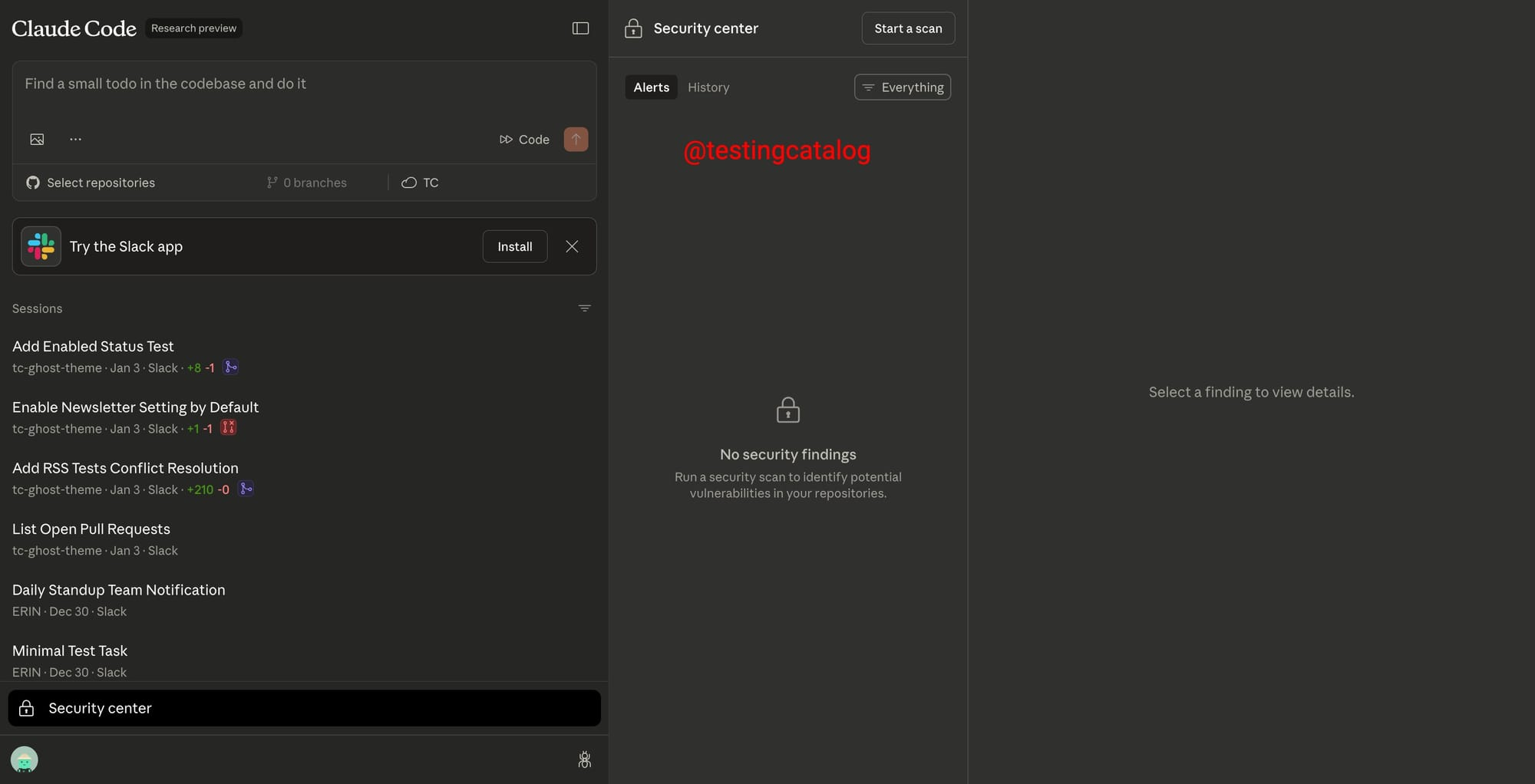
Anthropic is preparing to roll out Security Center for Claude Code, a centralized dashboard designed to consolidate scans, flag issues across repositories, and support manual checks by repository or branch. The feature was previously called AutoPatch, and the timing is not subtle: developer interest in AI coding is accelerating, and “security” is the sharp edge everyone is going to argue about.
Separately, traffic signals around Claude appear to be trending up. AI Breakfast notes a Claude Code surge tied to the “Claude CoWork effect,” and says Similarweb reports growth in searches, website traffic, app downloads, and daily active users over the last month. The implication is that Anthropic is expanding from “helpful chatbot” to “serious developer platform,” and doing it while the market is watching OpenAI upgrade Codex.
Why it matters
If AI is increasingly writing and changing production code, the question becomes: who is watching the watcher. A built-in security layer suggests Anthropic is trying to be the vendor that can say, with a straight face, “Yes, your agent can ship code, and yes, it can do it responsibly.”
The Deets
- Security Center is described as a central dashboard for scans and issue flags across repos.
- It supports manual checks by repo or branch.
- No launch date was announced.
- The move comes alongside broader competitive heat as OpenAI pushes “Cybersecurity High.”
Key takeaway
Coding copilots are becoming coding coworkers, and Anthropic is trying to make “secure by default” the next battleground.
🧩 Jargon Buster - AutoPatch: A system that identifies code vulnerabilities and proposes fixes, often automatically.
🧰 Tools & Products
Spreadsheet World Gets 'Claudepilled'
Claude in Excel is now available on Pro plans.
— Claude (@claudeai) January 23, 2026
Claude now accepts multiple files via drag and drop, avoids overwriting your existing cells, and handles longer sessions with auto compaction.
Get started: https://t.co/cAMDXM1h7r pic.twitter.com/yt9Gy2HLY3
'Anthropic expanded access to Claude for Excel, making the AI spreadsheet assistant available to Pro-tier customers after a three-month beta limited to Max and Enterprise plans. The integration puts Claude into a sidebar inside Excel, bringing “chat your way through analysis” directly into the most-used business tool on Earth.
This is not just “help me write a formula.” The update also supports pulling in multiple spreadsheets at once, working longer with improved session handling via behind-the-scenes memory management, and includes safeguards designed to preserve existing cell contents so Claude does not accidentally overwrite data while editing.
Why it matters
Coding automation is flashy, but spreadsheets are where the actual economy goes to live. If Excel becomes conversational and agentic, a huge slice of knowledge work shifts from “remember the syntax” to “describe the outcome,” which changes who can do analysis and how quickly teams can iterate.
The Deets
- Launched in October in research preview.
- Now available to Pro users, beyond Max and Enterprise.
- Adds protections so Claude will not overwrite existing cell contents while making changes.
- Enables longer sessions and multi-sheet workflows.
Key takeaway
The spreadsheet era is morphing and getting an AI copilot and a much bigger ambition.
🧩 Jargon Buster - Memory Management: Techniques that help AI systems keep context longer without crashing into limits.
Tip: Remotion Turns Marketing Videos Into A Software Problem
The Rundown highlighted a workflow for creating ads and marketing videos using Remotion, where videos are generated programmatically with code. The approach leans on tooling like NotebookLM for ideation and specs, then uses a coding assistant to turn that spec into reusable video components, preview them locally, and export variations fast.
This is not a “click around in a video editor” vibe. It is template-first production where creative becomes a set of composable parts, and iteration becomes cheap enough that the limiting factor is taste, not timeline.
The Deets
- NotebookLM is used to generate concepts and a PRD.
- A Remotion project is created and run locally, then code is generated and previewed before export.
- The workflow encourages reusable templates and fast iteration.
Key takeaway
Creative is getting automated, but the winners will be the teams that can systematize creative without making it soulless.
💰 Funding & Startups
Dreame Commits $560M To Robotics R&D As Consumer Bots Expand Beyond Cleaning
Dreame Technology is committing about $560M to robotics R&D units, positioning itself beyond smart cleaning toward a broader “people-home-car ecosystem.”
The move signals a consumer robotics push where companies that started with narrow, practical products are trying to evolve into platform players.
This is the “robotics ladder” in action: ship a single reliable product, build distribution and trust, then widen the scope. The capital spend implies Dreame is betting that embodied AI and robotics are ready for a bigger leap in capability, not just marketing.
Why it matters
Robotics has always struggled with the jump from demo to deployment. Large, sustained R&D budgets from consumer companies suggest the sector is shifting from one-off moonshots toward product roadmaps and manufacturing reality.
The Deets
- Dreame’s spend is described as about $560M focused on robotics R&D.
- The goal is expansion beyond cleaning into a wider ecosystem.
Key takeaway
The robotics race is increasingly being funded by companies that already know how to ship hardware at scale.
🧪 Research & Models
Soft Robots Finally Get Strong Without Losing Their Flex
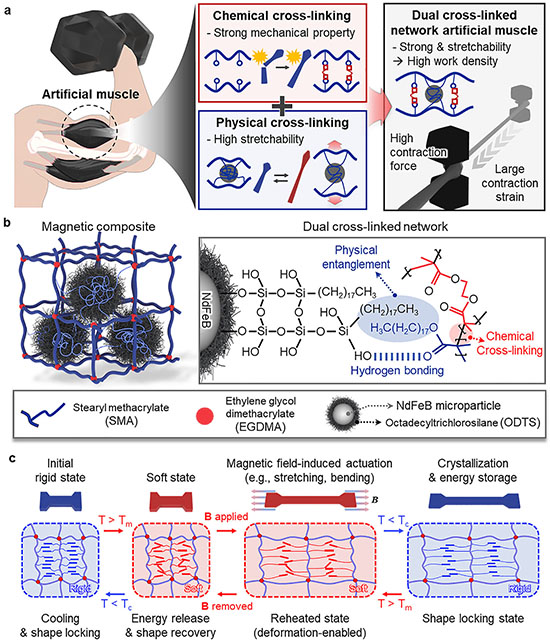
Researchers at Ulsan National Institute of Science and Technology unveiled a dual cross-linked magnetic polymer that breaks a core soft robotics tradeoff: it can stretch like rubber while still delivering real force.
Robotics Herald related work density of 1,150 kJ per cubic meter with 86% strain, and the material can bear a load of more than 4,000 times its own weight, while also enabling programmable stiffness.
The key mechanism is energy storage and release: the polymer stores energy when cool and releases it when reheated under a magnetic field, allowing strong actuation while maintaining soft compliance. It also reportedly keeps performance after hundreds of cycles, which matters because soft robotics has historically been fragile or inconsistent over time.
Why it matters
Soft robots have been stuck as “flexible but weak” or “strong but stiff.” If this material scales beyond the lab, it rewrites actuator design by collapsing actuation, energy storage, and compliance into the material itself. That puts traditional motor-driven architectures under pressure in wearables, surgical tools, and tight-space inspection.
The Deets
- Dual cross-linked magnetic polymer with high work density and high strain.
- Programmable stiffness adjustment is part of the design.
- Designed to maintain performance after many cycles.
Key takeaway
Soft robotics is inching toward real-world strength, not just impressive squish.
🧩 Jargon Buster - Work Density: How much mechanical work a material or actuator can output per unit volume.
Robotic Surgery Starts Getting Its Sense Of Touch Back
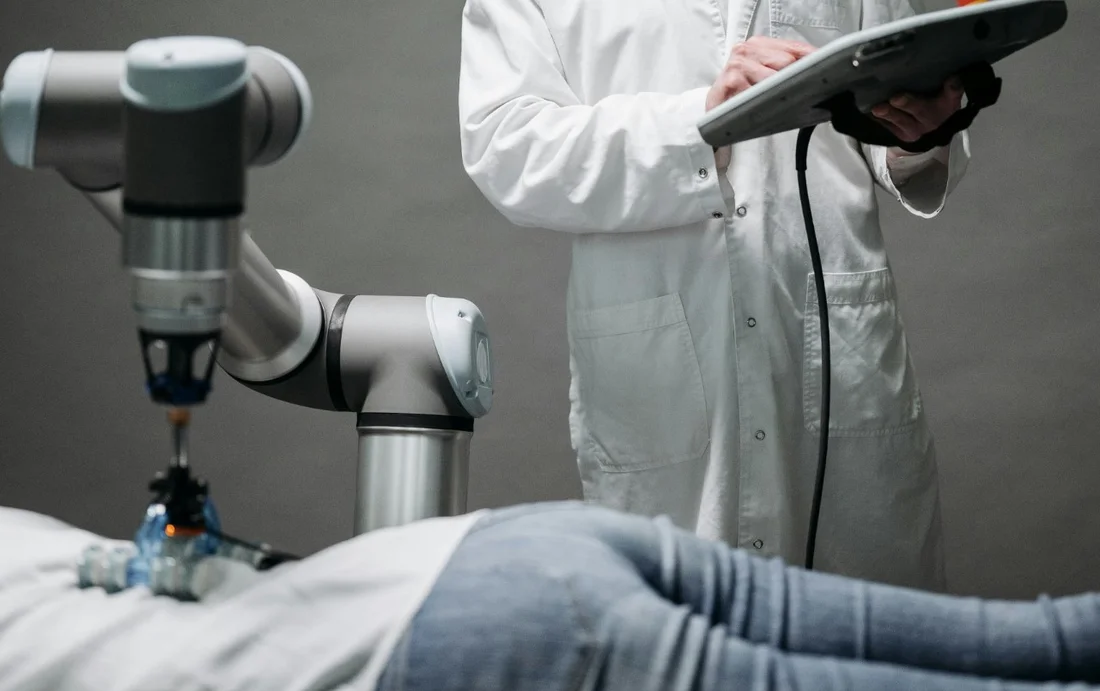
A European research effort called PALPABLE is building soft robotic fingertips to restore tactile feedback in robotic surgery. The system uses deformable materials, fiber-optic sensing, and AI to convert pressure into visual stiffness maps, with prototype testing beginning in early 2026, targeting minimally invasive procedures where touch is currently lost.
Modern surgical robots can see in 3D and move with extreme precision, but they remain sensorially blunt. Touch is the first layer being rebuilt because it directly affects decisions like margins and tissue differentiation. Once tactile data becomes standard, it creates a template for richer sensing stacks, including texture and resistance.
Why it matters
Robots that can “feel” change how surgeons operate and how safety is designed. Shared perception is a pathway from robots-as-tools to robots-as-partners, especially in high-stakes environments like operating rooms.
The Deets
- Uses soft materials, fiber-optic sensing, and AI-driven interpretation.
- Converts pressure into visual stiffness maps.
- Prototype testing starts early this year.
Key takeaway
Surgical robotics is evolving from precision to perception, and touch is the opening move.
🧩 Jargon Buster - Tactile Feedback: Information about pressure and contact that helps humans or machines “feel” interactions with objects.
⚡ Quick Hits
A Microsoft-Tsinghua team trained a 7B coding model that reportedly beats 14B rivals using only synthetic data. Source: AI Breakfast
Google DeepMind unveiled D4RT, a unified model that reconstructs dynamic 4D scenes from video to improve spatial perception for robots and AR. Source: Robotics Herald
Meta is blocking teens from AI characters during a safety overhaul. Source: AI Breakfast
xAI is opening the door to customized models in Grok with a new “Dev Models” section. Source: AI Breakfast
Similarweb signals shifting chatbot dynamics: Gemini gaining share, Grok climbing, and ChatGPT stabilizing. Source: AI Breakfast
Gallup reports workplace AI adoption is plateauing, with nearly half of U.S. workers saying they never use AI tools, even as frequent users deepen their habits. Tech leads, and remote-capable roles are pulling further ahead. Source: The Rundown AI
🧰 Tools of the Day
Qwen3 TTS: Alibaba’s open-source text-to-speech models positioned as state of the art.
Tasklet: An AI agent that connects to apps and APIs, runs automatically 24/7, and uses a computer to get work done.
Remotion: Programmatically generate ads and marketing videos with reusable templates and code-driven iteration.
Claude for Excel: Claude embedded directly into Excel for multi-sheet analysis, editing help, and safer spreadsheet changes for Pro users.
Today’s Sources: AI Breakfast, The Rundown AI, Robotics Herald