
Gemini Gets Personal; Celeb™️ Fights Deepfakes; Robots Break Barriers
Today's AI Outlook: 🌤️
Google Turns Personal Context Into Its AI Superpower
Google has rolled out a new Personal Intelligence beta that lets Gemini reason across Gmail, Photos, YouTube and Search without users needing to specify where the info lives. Instead of “check my email,” you just ask. Gemini figures out the rest.
This isn't a narrow feature add... Gemini can now connect text, images, and video across your Google life. In one demo, a Google VP described Gemini pulling photos and emails together to help him at a tire shop.
(Importantly, it’s off by default, and Google says this personal data will not be used to directly train its models.)
The rollout starts with Gemini AI Pro and Ultra subscribers in the U.S., with plans to eventually reach free tiers and AI Mode.
Why it matters
Frontier models are converging. What’s left is context, and no one has more of it than Google. Billions of people already live inside Gmail, Photos, and YouTube; turning that into an AI layer is less about smarter answers and more about an AI moat competitors cannot easily ford.
This data is something My Training Data imagined capturing for LLMs, then remunerating consumers for ... Google has no published plans to pay anyone.
The Deets
- Works across Gmail, Photos, YouTube and Search
- Multimodal reasoning across text, images and video
- Opt-in only, off by default
- No direct training on inboxes or photo libraries
- U.S. rollout first for paid users
Key takeaway
As raw intelligence flattens, personal data becomes the differentiator. Google is betting that trust plus scale beats novelty.
🧩 Jargon Buster - Personal Intelligence: An AI system that uses your own historical data and context to personalize responses, rather than relying only on general training.
Source: The Rundown AI
⚡ Power Plays
ElevenLabs Investor (McConaughey) Trademarks Himself To Fight Deepfakes
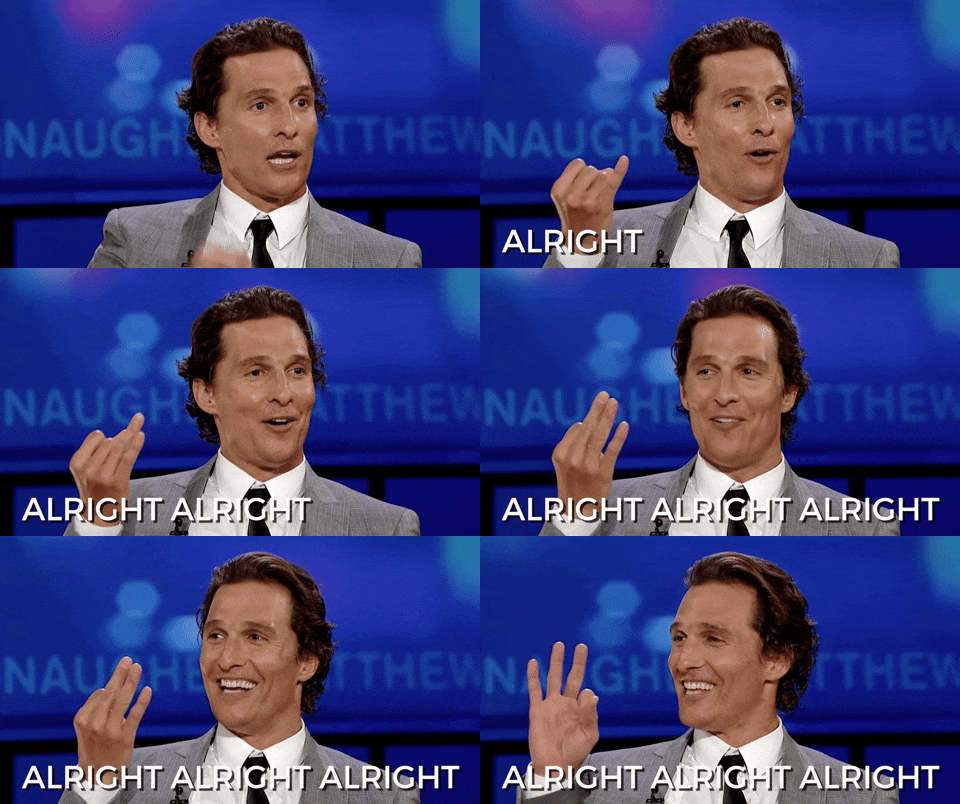
Matthew McConaughey secured eight trademarks covering his voice, likeness and signature video clips, including the famous “Alright, alright, alright.” The goal is to fight AI-generated impersonations and misuse with clearer legal standing.
Unlike state-level publicity laws, these trademarks open the door to federal court enforcement. McConaughey says the intent is to make consent and attribution the norm in an AI world. He also happens to be an investor in ElevenLabs and the face of Salesforce’s Agentforce ads.
Why it matters
AI video and voice tools are outpacing legal clarity. Trademarks may become one of the few practical levers creators have to push back against deepfakes at scale.
The Deets
- Covers voice, likeness, and short video clips
- Enables federal enforcement, not state-by-state fights
- Comes as AI models loosen likeness safeguards
Key takeaway
In the AI era, owning yourself may require paperwork.
🧩 Jargon Buster - Right of publicity: Legal rights controlling commercial use of a person’s identity, now being stress-tested by AI.
Source: The Rundown AI
🧪 Research & Models
Chipping Away: China Trains Open Image Model Sans Nvidia
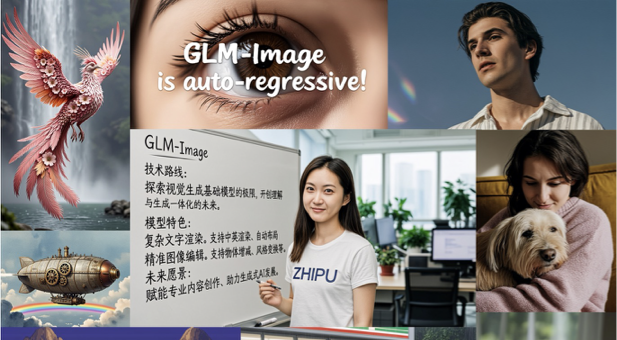
Zhipu AI released GLM-Image, an open-source image generator trained entirely on Huawei Ascend chips. The 16B-parameter model claims strong benchmark performance, especially with text-heavy images.
Early user feedback has been mixed. Quality trails top closed models, but the release proves something bigger: advanced AI training without U.S. semiconductors is now viable.
Why it matters
This is less about image quality and more about geopolitics. China’s AI ecosystem is learning to route around the chip war.
The Deets
- Trained fully on Huawei hardware
- Open-source under a permissive license
- Strong benchmarks, weaker real-world tests
Key takeaway
Compute independence is becoming as important as model performance.
🧩 Jargon Buster - Open-source model: A model released with weights and licenses that allow public use and modification.
Source: The Rundown AI
🧠 Power Plays
AI Learns To Spend Your Money (But Check Your Wallet)
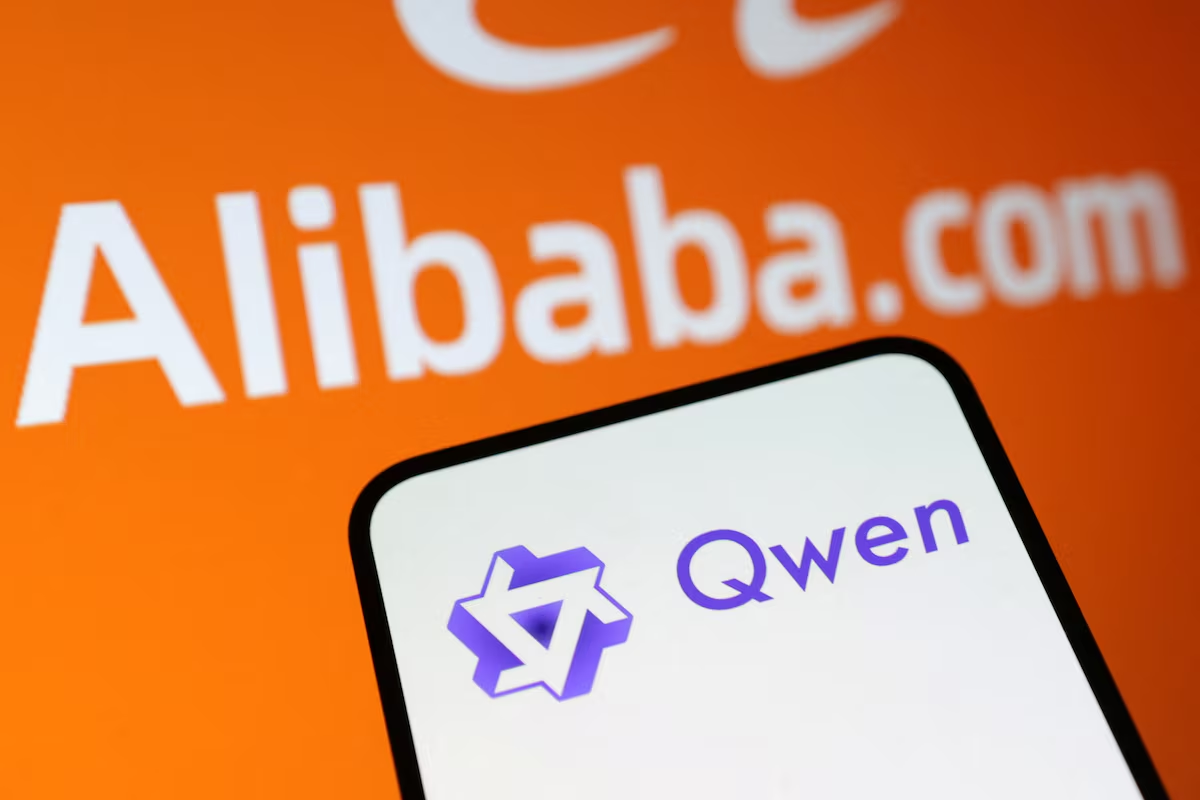
Alibaba upgraded its Qwen app to order food, book travel and complete payments directly in chat. In testing, intent errors popped up fast. One request for iced milk tea resulted in a hot one.
Meanwhile, Google and OpenAI are splitting on commerce architecture. Google introduced UCP, a deep, end-to-end commerce protocol. OpenAI countered with ACP, a lighter system that triggers purchases without owning payments.
Why it matters
Once AI can transact, mistakes cost real money. Reliability moves from UX polish to existential risk.
The Deets
- Qwen claims over 100M monthly users
- UCP offers depth and standardization
- ACP favors flexibility and lower liability
Key takeaway
Agentic AI is moving faster than its error handling.
🧩 Jargon Buster - Agentic AI: Systems that take actions in the world, not just generate responses.
Source: AI Secret
🤖 Big Picture
Robots Start Touching Space, Science And Faces
Across three fronts, robotics have crossed psychological thresholds. Orbital Robotics is testing AI-driven arms that can safely grab satellites. Conceivable Life Sciences automated nearly the entire IVF process, helping produce 19 babies. And researchers taught a humanoid robot to learn facial expressions by watching itself, not rules.
Why it matters
Robots are moving from observation to interaction. Once machines can touch satellites, embryos and human faces reliably, entire industries reprice around automation.
The Deets
- Orbital servicing could protect assets worth tens of billions
- IVF automation targets $30,000-per-cycle costs
- Facial responsiveness may unlock human trust
Key takeaway
The hardest robotics problem was never truly movement. It was acceptance.
🧩 Jargon Buster - Degrees of freedom: The number of independent movements a robotic system can perform.
Source: Robotics Herald
⚡ Quick Hits
- OpenAI struck a deal with Cerebras for 750MW of dedicated compute.
- Microsoft is actively selling Anthropic models inside Azure.
- Slack turned Slackbot into a personal AI agent.
- Bandcamp banned AI-generated music and AI training. More…
🛠️ Tools of the Day
- Thesys: Build AI apps with interactive UI instead of walls of text.
- Nume: An AI CFO for startups and SMEs.
- Beacon: Tracks your brand across AI search and chat platforms.
- Brushless: Generates brand-consistent vector illustrations from prompts.
Today’s Sources: The Rundown AI, AI Secret, Robotics Herald